Author: Edidiong Blessing

  • Bella Shmurda’s Story: Redefining Success Beyond Classroom Grades

    Bella Shmurda’s Story: Redefining Success Beyond Classroom Grades

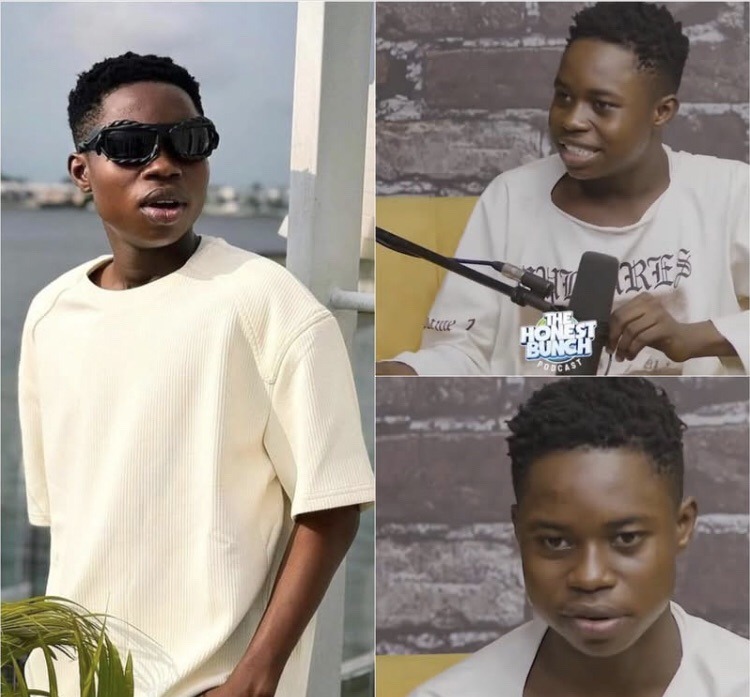
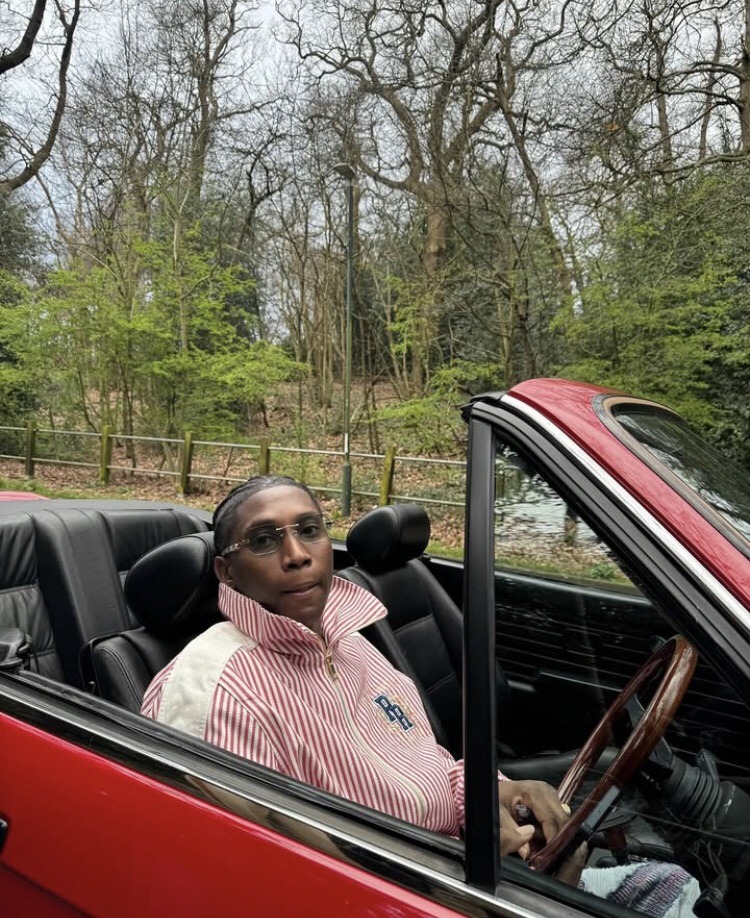
    When Bella Shmurda shared his journey of being labeled the “dullest” student in school to becoming a successful musician, he highlighted a reality many people can relate to: traditional academic success doesn’t define everyone’s future. In his own words, his poor grades pushed him to drop out of school, a decision that led him to pursue his passion for music. Today, Bella Shmurda is one of the most successful artists among his peers, proving that success comes in many forms.

    Latest Nigeria celebrity event photos

    The Pressure of Academic Performance

    In many cultures, students are judged based on how well they perform in school. Grades are often seen as a measure of intelligence and a predictor of future success. For students like Bella Shmurda, this pressure can feel overwhelming. Low grades may lead to feelings of inadequacy and frustration, especially when classmates and teachers reinforce these labels. However, as Bella’s story shows, traditional schooling isn’t the only way to succeed in life.

    Turning “Failure” Into Motivation
    Latest Nigeria celebrity event photos

    Bella didn’t let his struggles with academics define his future. Instead, he recognized that school wasn’t his strength and used this realization as a turning point. Dropping out wasn’t a sign of giving up; it was a decision to focus on something he was passionate about—music.

    This decision wasn’t without risks. Dropping out of school doesn’t guarantee success, and not everyone who does so ends up thriving in their chosen field. But Bella’s story is a testament to what can happen when someone is willing to work hard and take a chance on their talents.

    Lessons From Bella Shmurda’s Journey

    1. Success Isn’t One-Size-Fits-All

    Bella’s story is a reminder that there’s no single path to success. Academic excellence works for many, but others may find fulfillment and achievement in creative fields, entrepreneurship, or other unconventional routes.

    2. Self-Awareness Is Key

    Knowing your strengths and weaknesses can help guide your decisions. Bella realized that academics weren’t his strength but music was. By focusing on what he was good at, he was able to build a career that not only brought him success but also happiness.

    3. Hard Work and Dedication Matter

    Dropping out of school isn’t the secret to success—it’s the hard work, discipline, and resilience that come afterward. Bella put in the effort to hone his craft and build his career, proving that dedication is crucial no matter the path you choose.

    Risks of Dropping Out

    While Bella Shmurda’s story is inspiring, it’s important to recognize that not everyone who struggles in school will find success by dropping out. For many, staying in school provides essential skills, connections, and opportunities that can lead to a fulfilling career.

    If you’re considering leaving school to pursue a passion, ask yourself:

    • Are you ready to work hard and stay disciplined in your chosen field?

    Latest Nigeria celebrity event photos

    • Do you have a support system to help you navigate challenges?

    • Have you considered alternative paths, such as part-time schooling or vocational training, that might better suit your goals?

    Redefining Success

    At its core, Bella’s story challenges the traditional definition of success. It’s not just about grades or following a conventional path. Success is about finding what makes you happy and working toward it, even if it means taking risks or facing criticism.

    His journey also serves as a reminder that everyone has their own timeline. Just because you’re not excelling in one area doesn’t mean you’re failing—it might just mean that your success lies elsewhere.

  • Did Davido Inspire Burna Boy, Rema, Fireboy, and the “New Cats” in Afrobeat?

    Did Davido Inspire Burna Boy, Rema, Fireboy, and the “New Cats” in Afrobeat?

    Afrobeats has grown into a global movement, with several Nigerian artists leading the charge. Recently, Davido made a statement suggesting that apart from Wizkid, he inspired and paved the way for artists like Burna Boy, Rema, Fireboy, and others he referred to as the “New Cats.” This claim has sparked debates within the music community.

    Here, we explore Davido’s influence, his contributions to Afrobeat, and whether his assertion holds up when looking at the timeline of events and achievements in the genre.

    Davido’s Contributions to Afrobeat

    Davido is undeniably one of the key figures responsible for making Afrobeats a global phenomenon. Since his breakout hit “Dami Duro” in 2011, he has consistently delivered chart-topping songs and collaborated with international stars like Chris Brown, Nicki Minaj, and others. His music videos, often characterized by their high-quality production, helped present Afrobeats in a way that resonated globally.

    Moreover, Davido’s work ethic and consistency set a standard for upcoming artists. He has used his platform to support younger talents, signing artists like Mayorkun and Peruzzi to his DMW label. This mentorship role is one reason some believe he has influenced the next generation of artists.

    The “New Cats” and Their Journeys

    Let’s take a closer look at the artists Davido mentioned:

    1. Burna Boy

    Latest Nigeria celebrity event photos

    Burna Boy’s career dates back to 2012 when he released his debut album L.I.F.E. However, his global recognition skyrocketed with the 2018 release of Outside, featuring the hit track “Ye.” Unlike Davido, Burna Boy’s style leans heavily on Afro-fusion, blending Afrobeat, dancehall, and reggae influences. While it’s clear Burna Boy has benefited from the global rise of Afrobeats, his musical journey was distinct and heavily influenced by his grandfather’s connection to Fela Kuti and his time in the UK.

    2. Rema

    Latest Nigeria celebrity event photos

    Rema is among the youngest and most exciting voices in today’s Afrobeats scene. Signed to Mavin Records in 2019, his debut single “Dumebi” propelled him to fame. Rema represents the new wave of artists who are blending Afrobeats with trap, pop, and alternative sounds. While Davido may have inspired Rema’s belief in the global potential of Afrobeats, Rema’s success owes much to his unique sound and vision.
    3. Fireboy DML

    Latest Nigeria celebrity event photos

    Fireboy DML burst onto the scene with his debut album Laughter, Tears, and Goosebumps in 2019, showcasing a sound that combines Afrobeats with R&B and soul. His hit single “Jealous” became an anthem, and Fireboy has continued to dominate with songs like “Peru,” which was remixed by Ed Sheeran. While Fireboy has cited artists like Wizkid and Wande Coal as inspirations, it’s possible that Davido’s global breakthroughs helped create a more accepting market for artists like him.

    Did Davido “Pave the Way”?

    The idea of “paving the way” can mean different things. It could refer to breaking barriers, providing opportunities, or inspiring others.

    Breaking Barriers: Davido, Wizkid, and others undeniably opened doors internationally, making it easier for subsequent artists to enter foreign markets.

    Providing Opportunities: Davido’s DMW label has directly helped a number of artists, though Burna Boy, Rema, and Fireboy do not fall into this category.

    Inspiration: Many artists have been inspired by Davido’s success story, his ability to blend African sounds with global appeal, and his consistency in delivering hits.

    However, artists like Burna Boy and Rema have carved out their paths with unique styles that differ significantly from Davido’s approach.

    Latest Nigeria celebrity event photos

    Why This Debate Matters

    The conversation surrounding Davido’s claim is important because it highlights the collaborative and interconnected nature of Afrobeats. Every artist, whether a pioneer or newcomer, contributes to the genre’s growth in different ways.

    Afrobeats thrives on its diversity of sounds, and while Davido deserves credit for his influence, the success of artists like Burna Boy, Rema, and Fireboy is equally tied to their individuality, hard work, and the infrastructure built by earlier legends like Fela Kuti, 2Baba, and others.

    What’s Next for Afrobeats?

    Afrobeats is no longer confined to Nigeria or even Africa. With stars like Burna Boy headlining stadiums, Rema charting globally with “Calm Down,” and Fireboy collaborating with international acts, the genre is reaching new heights. While pioneers like Davido, Wizkid, and Burna Boy continue to push boundaries, the “New Cats” are poised to carry the torch forward.

    Davido’s statement may have sparked a debate, but one thing is clear: the success of Afrobeats is a collective effort. Every artist, old or new, plays a role in shaping its future.

  • Wizkid Adds 2024 McLaren 750S to His Luxury Car Collection

    Wizkid Adds 2024 McLaren 750S to His Luxury Car Collection

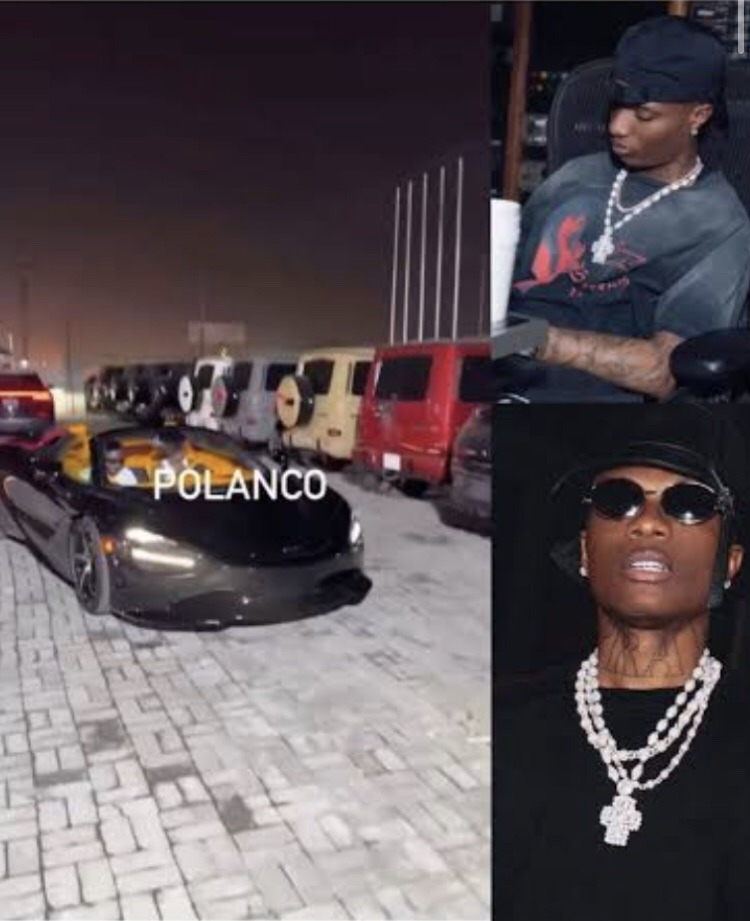
    Nigerian music icon Wizkid has taken his lifestyle to the next level by acquiring the stunning 2024 McLaren 750S, a luxury vehicle worth an estimated ₦1.7 billion. This purchase solidifies his position as one of the most successful and trend-setting artists in the world.

    Latest Nigeria celebrity event photos

    A Masterpiece of Automotive Engineering

    The McLaren 750S isn’t just any car; it’s a statement of excellence. Designed with cutting-edge technology and high-performance features, it is one of the most advanced models in McLaren’s lineup. This supercar comes with a twin-turbocharged V8 engine, delivering up to 750 horsepower and a top speed of over 200 mph. With its lightweight construction and aerodynamic design, the 750S offers both speed and agility, making it a perfect choice for a global superstar like Wizkid.

    https://www.instagram.com/reel/DD7_NuDsLz-/?igsh=eWZzNjJxb2FmMnN5

    Why the 2024 McLaren 750S Stands Out

    1. Performance: The car boasts a 0-60 mph acceleration in just 2.7 seconds, making it one of the fastest vehicles on the market.

    2. Luxury: The interior is designed for maximum comfort, featuring premium materials and state-of-the-art technology.

    3. Exclusivity: Owning a McLaren 750S is a rare privilege, reserved for those who appreciate luxury and performance at the highest level.

    Wizkid’s Lifestyle and Passion for Cars

    Latest Nigeria celebrity event photos

    Wizkid is known not only for his chart-topping music but also for his love of luxury and style. Over the years, he has built an impressive car collection, which includes brands like Lamborghini, Rolls-Royce, and Mercedes-Benz. The addition of the McLaren 750S reflects his refined taste and dedication to living life at the top.

    For fans, this purchase is another example of Wizkid’s ability to inspire and lead by example. As a symbol of success, he continues to motivate millions of people around the world to dream big and work hard.

    How This Purchase Impacts Wizkid’s Brand

    Acquiring a high-performance vehicle like the 2024 McLaren 750S aligns with Wizkid’s image as a global superstar. It reinforces his reputation as an artist who not only dominates the music industry but also understands the value of luxury and exclusivity.

    By showcasing this new car, Wizkid sets trends and continues to position himself as a leader in the entertainment and lifestyle industries. This move will likely spark conversations and further cement his legacy as a cultural icon.

    Fans React to Wizkid’s New Ride

    Social media has been buzzing since the news of Wizkid’s latest acquisition broke. Fans are celebrating his success, with many calling him “Everybody’s Popcy” for his ability to balance humility and grandeur. Others have pointed out how this purchase reflects his influence and success on a global scale.

    What’s Next for Wizkid?

    Latest Nigeria celebrity event photos

    As one of the most influential artists in the Afrobeat genre, Wizkid shows no signs of slowing down. Whether it’s breaking records with his music, performing on international stages, or making bold lifestyle choices, he continues to inspire.

    With the addition of the McLaren 750S to his collection, Wizkid has once again proven that he is not just an artist but a true icon of style and success.

  • How Peller Used “Bad English” to Become a Star in Nigeria

    How Peller Used “Bad English” to Become a Star in Nigeria

    Peller struggled with low TikTok views until he changed his style from polished English to intentionally “bad English” with humor, which made his content more relatable and viral among Nigerian audiences. The shift boosted his engagement massively, showing that relatability, simplicity, and cultural humor often perform better than perfection on social media.

    Social media success often depends on understanding what resonates with your audience. Peller, a Nigerian content creator, discovered this the hard way. When he started creating TikTok videos with polished English, his content struggled to gain traction, barely receiving more than 10 views. However, a simple shift in his approach changed everything. By intentionally using “bad English” and embracing a more humorous, relatable style, Peller quickly became a sensation, with his videos drawing thousands of views.

    This story highlights a powerful lesson about how to succeed in Nigeria’s social media space. Peller didn’t stumble upon success by accident; he understood the kind of content that grabs attention and leaned into it. Let’s explore how this strategy works and why it’s so effective in a market like Nigeria.

    Why Nigerians Love Relatable and Entertaining Content

    Nigerian audiences are unique. They are drawn to content that feels accessible, fun, and easy to connect with. In many cases, creators who present themselves as overly polished or formal often struggle to capture attention. Instead, content that includes humor, simplicity, and a touch of imperfection tends to thrive.

    Latest Nigeria celebrity event photos

    Peller realized this early on. By intentionally making grammatical errors and exaggerating his “bad English,” he created content that entertained his audience. This wasn’t a sign of ignorance; it was a calculated move to make his videos more appealing to a demographic that values entertainment above all.

    The results speak for themselves. Peller’s content became a viral hit, and his live sessions started pulling in thousands of viewers. What makes this strategy so effective is its relatability. Many Nigerians see themselves in Peller’s videos and appreciate the humor in his intentional blunders.

    The Psychology Behind the Strategy

    One of the reasons this approach works is that it taps into a broader cultural love for humor and self-deprecation. Nigerians enjoy creators who don’t take themselves too seriously. By using “bad English,” Peller positioned himself as someone who doesn’t pretend to be perfect—someone who prioritizes entertainment over formality.

    Additionally, humor has a way of breaking barriers. Viewers don’t need to concentrate too hard to enjoy Peller’s content. The simplicity of his approach ensures that his videos can be enjoyed by anyone, regardless of their education level or social status.

    What Other Creators Can Learn from Peller

    If you’re a content creator in Nigeria (or anywhere else), there’s a lot you can learn from Peller’s success:

    1. Know Your Audience

    Take time to understand what your target audience finds entertaining or engaging. For Nigerians, humor, drama, and relatability often work better than overly polished or formal content.

    2. Be Willing to Experiment

    Peller didn’t stick to one formula when his polished English videos didn’t work. Instead, he tried something different, even if it felt unconventional. Creators should embrace experimentation to find what resonates.

    3. Lean Into Your Unique Selling Point

    Peller’s “bad English” became his brand, setting him apart from countless other creators. Find what makes you unique and lean into it unapologetically.

    4. Engage Consistently

    A big part of Peller’s success came from his live sessions, where he interacted with his audience in real time. This consistent engagement helped build a loyal fanbase.

    Why Peller’s Story Matters

    Peller’s journey is more than just a success story; it’s a blueprint for creators looking to stand out in Nigeria’s crowded social media scene. It shows that you don’t need to be perfect to be successful. What matters most is your ability to connect with your audience, even if that means stepping out of your comfort zone.

    For creators looking to grow their platforms, Peller’s example serves as a reminder that creativity and relatability often outweigh perfection. By understanding what works for your audience and leaning into it, you too can build a loyal following and make a name for yourself.

    Related: TikTok Star Peller Buys N350 Million Mansion in Lagos

    Reported by Anything Celebrity – Nigeria’s hub for entertainment gist and celebrity updates.

    See more on Anything Celebrity entertainment news.

    © 2026 Anything Celebrity. Follow us on social: X | Facebook.

  • Davido Joins Chris Brown at FNB Stadium: A Night of Afro-American Musical Unity

    Davido Joins Chris Brown at FNB Stadium: A Night of Afro-American Musical Unity

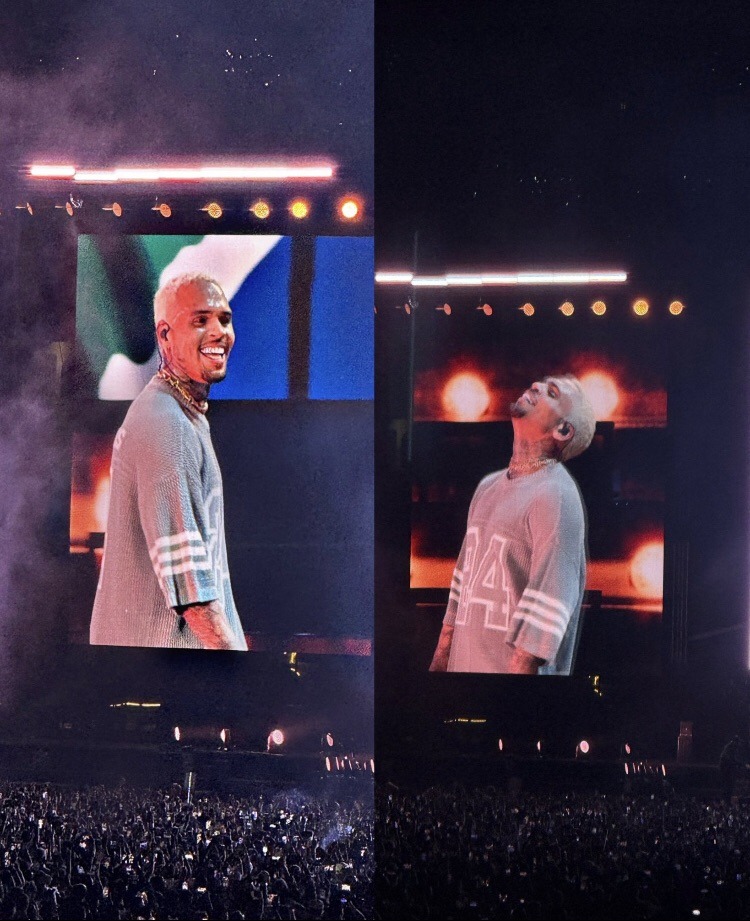
    In a testament to the power of global music collaboration, Nigerian superstar Davido is set to perform at Chris Brown’s much-anticipated concert at the iconic FNB Stadium in Johannesburg, South Africa. This performance, happening during the second night of Chris Brown’s tour stop, underscores the strong bond between the two artists and highlights the growing influence of African music on the global stage.

    Chris Brown and Davido: A Brotherhood in Music

    Chris Brown and Davido share a well-documented friendship that has translated into multiple successful musical projects. Tracks like “Blow My Mind” and “Nobody Has to Know” have cemented their status as one of the most dynamic duos in music today. Brown’s decision to personally invite Davido as the sole African act for this historic concert at a venue with over 94,000 seats speaks volumes about their mutual respect and the trust he places in Davido to deliver an unforgettable performance.

    From India to Brazil to South Africa: Davido’s Nonstop Global Tour

    Just 48 hours ago, Davido was in India for an electrifying performance where he reportedly earned an impressive $10 million. Shortly after, he flew to Brazil for another major event. Now, the Nigerian megastar is in South Africa, bringing his energy and chart-topping hits to Chris Brown’s stage.

    This relentless schedule showcases Davido’s unparalleled work ethic and his ability to connect with audiences worldwide. Fans are thrilled to witness how he bridges cultural gaps with his Afrobeat sound, captivating diverse crowds with his infectious melodies and vibrant performances.

    Why FNB Stadium Matters

    The FNB Stadium, also known as Soccer City, is not just any venue—it’s a cultural landmark in South Africa. Hosting over 94,000 fans, it has seen historic events, including the 2010 FIFA World Cup final. For Davido to perform here alongside Chris Brown is a significant moment, not only for their careers but for African music as a whole.

    Davido’s presence represents a larger narrative of how African artists are dominating global spaces. It’s a celebration of how Afrobeat has become a universal language, breaking barriers and uniting people across continents.

  • The Story Behind “Kasongo” by Super Mazembe: A Timeless Message in Music

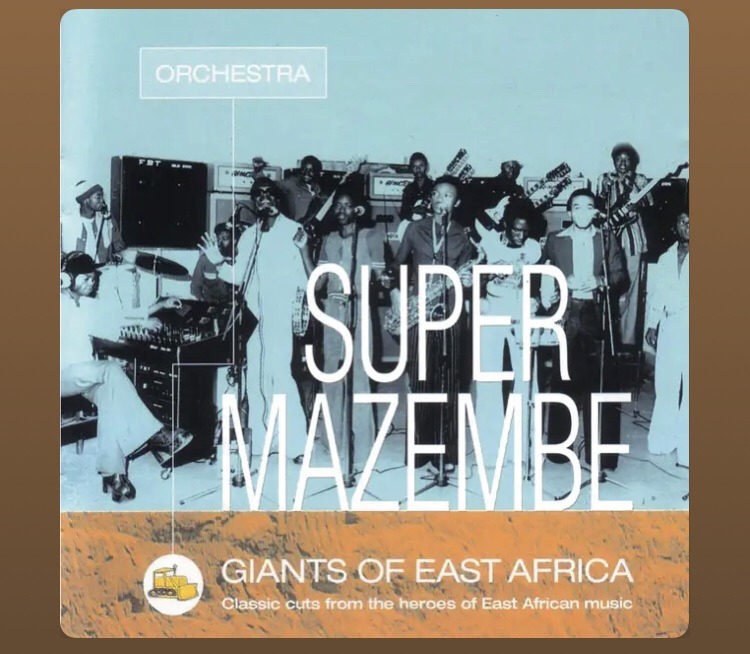
    The Story Behind “Kasongo” by Super Mazembe: A Timeless Message in Music

    When you hear the song “Kasongo” by Super Mazembe, you might be captivated by its rich melodies and heartfelt lyrics. But the story behind this classic track is just as compelling as the music itself. It’s a tale of friendship, creativity, and the power of music to communicate when words can’t.

    Super Mazembe, a Congolese band that made Kenya their home in the 1970s, created “Kasongo” during a visit to their friend’s house in Eastleigh, Nairobi. Kasongo wa Kanema, their friend, was not home when they arrived, and his wife shared her worry—he hadn’t been seen for days. With no way to reach him directly, the band decided to craft a song as a way of reaching out, hoping the message would find him wherever he was.

    Who Was Kasongo?

    Kasongo” by Super Mazembe

    Kasongo wa Kanema was a friend of the band members and a beloved figure in their circle. His absence from home left his wife concerned, prompting the band to channel their emotions into a heartfelt song. Sadly, Kasongo passed away two years ago and was laid to rest at Lang’ata Cemetery. His name, however, continues to live on through the music.

    Why Was the Song “Kasongo” Composed?

    Back in the 1970s, communication was not as accessible as it is today. Phones were rare, and the internet didn’t exist. If someone disappeared for a few days, there weren’t many ways to track them down. Kasongo’s wife expressed her concern to the band members, and in that moment, they decided to create a song that could act as both a message and a plea.

    The lyrics of “Kasongo” tell a story from the perspective of his wife, who is waiting for her husband to return. She expresses her worry and longing, asking him to come back home.

    The Lyrics: A Heartfelt Plea

    The chorus of the song captures the wife’s emotions:

    Kasongo ye yeee, mobali na ngai

    (Kasongo, my husband)

    Kasongo nga nawe oo

    (Kasongo, I am dying)

    Zonga libala ee

    (Come back to the marriage)

    Each verse paints a vivid picture of her situation. She describes sitting at home, constantly watching the street, hoping to see him return. She worries about what to tell people who keep asking where her husband is. The raw emotion in the lyrics resonates with anyone who has experienced waiting and worrying for a loved one.

    How the Song Became a Hit

    After composing the song in Kasongo’s living room, the band recorded it. Its relatable theme and infectious rhythm struck a chord with listeners, quickly turning it into one of Super Mazembe’s most beloved tracks. The song not only became a hit in Kenya but also gained recognition across East Africa.

    Why “Kasongo” Remains Relevant

    More than just a beautiful melody, “Kasongo” is a reminder of the universal themes of love, worry, and the bond between partners. It also showcases the power of music to serve as a bridge when other forms of communication fail.

    For Super Mazembe, this song wasn’t just a creative project; it was a practical solution to a real problem. In crafting “Kasongo,” the band demonstrated how music can carry a message, create awareness, and touch hearts all at once.

    A Legacy That Lives On

    Although Kasongo wa Kanema is no longer with us, his name lives on through this song. “Kasongo” is more than just a piece of music—it’s a story, a connection, and a cultural gem that continues to captivate audiences decades after its release.

    Super Mazembe’s ability to transform a personal moment into a timeless hit is a testament to their artistry. The song stands as a symbol of their deep connection to the people and places they called home, even after leaving Congo for Kenya.

    If you’ve never heard “Kasongo,” now is the perfect time to listen. It’s not just a song

  • The Accessibility Problem: Why African Fans Can’t Enjoy Their Favorite Nigerian Artists’ Concerts

    The Accessibility Problem: Why African Fans Can’t Enjoy Their Favorite Nigerian Artists’ Concerts

    African Fans and the Global Afrobeats Wave

    Nigerian music, especially Afrobeats, has become a global phenomenon. Artists like Burna Boy, Wizkid, and Davido have put Africa on the map with sold-out concerts in cities like London, New York, and Paris. However, a growing concern among fans is that these stars seem more accessible abroad than at home. Seun Kuti’s recent comments on this issue sparked debates across social media, and the frustration is real: the very fans who laid the foundation for these artists’ success can’t afford to see them perform live.

    Latest Nigeria celebrity event photos

    This article explores why this happens, its impact, and the conversations it raises about fairness, loyalty, and the economic challenges in Africa.

    Why African Fans Are Missing Out on Concerts

    1. High Costs of Local Concerts

    Concerts in Nigeria or other African countries are often priced beyond what the average fan can afford. Ticket prices can range from ₦20,000 to over ₦1 million for VIP access, depending on the artist and venue. For comparison, the national minimum wage in Nigeria is ₦30,000 per month. This disconnect between earnings and ticket costs makes live performances a luxury for many.

    2. Better Revenue Abroad

    International tours are far more lucrative. Fans in Europe, the United States, and even Asia are willing to pay significantly higher prices for concert tickets, which guarantees better income for the artists. A single sold-out show in a European arena might generate more revenue than multiple shows back home.

    Latest Nigeria celebrity event photos

    3. Infrastructure Challenges

    Organizing large-scale events in Nigeria and other African countries can be complicated. Many venues lack the facilities needed to host world-class concerts. Issues like power supply, security concerns, and logistical difficulties increase the cost of production. These challenges make it easier for artists to focus on markets where organizing events is smoother and more profitable.

    4. Perception of Value

    Performing abroad adds a layer of prestige to artists. A concert in London’s O2 Arena or New York’s Madison Square Garden is often seen as a milestone achievement. It attracts global media attention and validates an artist’s “international status.” While this is great for the artist’s brand, it can sometimes mean prioritizing foreign audiences over local fans.

    How This Affects Fans Back Home

    The issue goes beyond ticket prices. Nigerian and African fans often feel undervalued and excluded. They’ve supported these artists from their early days, streaming their music, attending local shows when they were still affordable, and spreading their songs through word of mouth. Now that these artists are global superstars, many fans feel left behind.

    For young people, especially, music is a source of pride. Seeing Nigerian artists succeed internationally brings joy and hope, but it’s bittersweet when they can’t share in that success firsthand.

    Social media adds to the frustration. Fans see pictures and videos of concerts abroad, full of people who didn’t grow up listening to those songs, while local fans can only watch from a distance.

    The Bigger Picture: Neo-Colonialism and African Resources

    Seun Kuti’s statement ties this issue to a larger conversation about neo-colonialism. For decades, Africa’s natural and human resources have been exported for the benefit of others. From oil and minerals to art and culture, Africans have often been excluded from enjoying their own wealth.

    In this case, Nigerian music has become Africa’s latest “resource” to gain global recognition. While it’s exciting to see the world embrace Afrobeats, the people who nurtured the culture and supported the artists are struggling to experience its success.

    Latest Nigeria celebrity event photos

    What Can Be Done?

    While the economic realities won’t change overnight, there are ways to make concerts more accessible for African fans:

    Affordable Local Shows: Artists can organize special shows with lower ticket prices for fans in their home countries. They can use sponsorships or partnerships to cover production costs and ensure affordability.

    Streaming and Virtual Concerts: Artists can offer live-streamed concerts for a fraction of the cost. This allows fans who can’t afford tickets to enjoy the experience in real-time.

    Better Infrastructure: Governments and private investors can improve concert venues, power supply, and security to reduce the cost of organizing shows locally.

    Fan Appreciation Events: Artists can hold free or low-cost events specifically for their local fans to show gratitude for their support.

    The Role of Fans

    Fans also play a role in keeping this conversation alive. By speaking up and holding artists accountable, they can push for changes. Nigerian artists owe much of their success to the loyal fans back home, and it’s only fair that they give back by creating opportunities for local fans to experience their music live.

  • Burna Boy and His Grammy Journey: The Role of Diddy and the Debate It Sparked

    Burna Boy and His Grammy Journey: The Role of Diddy and the Debate It Sparked

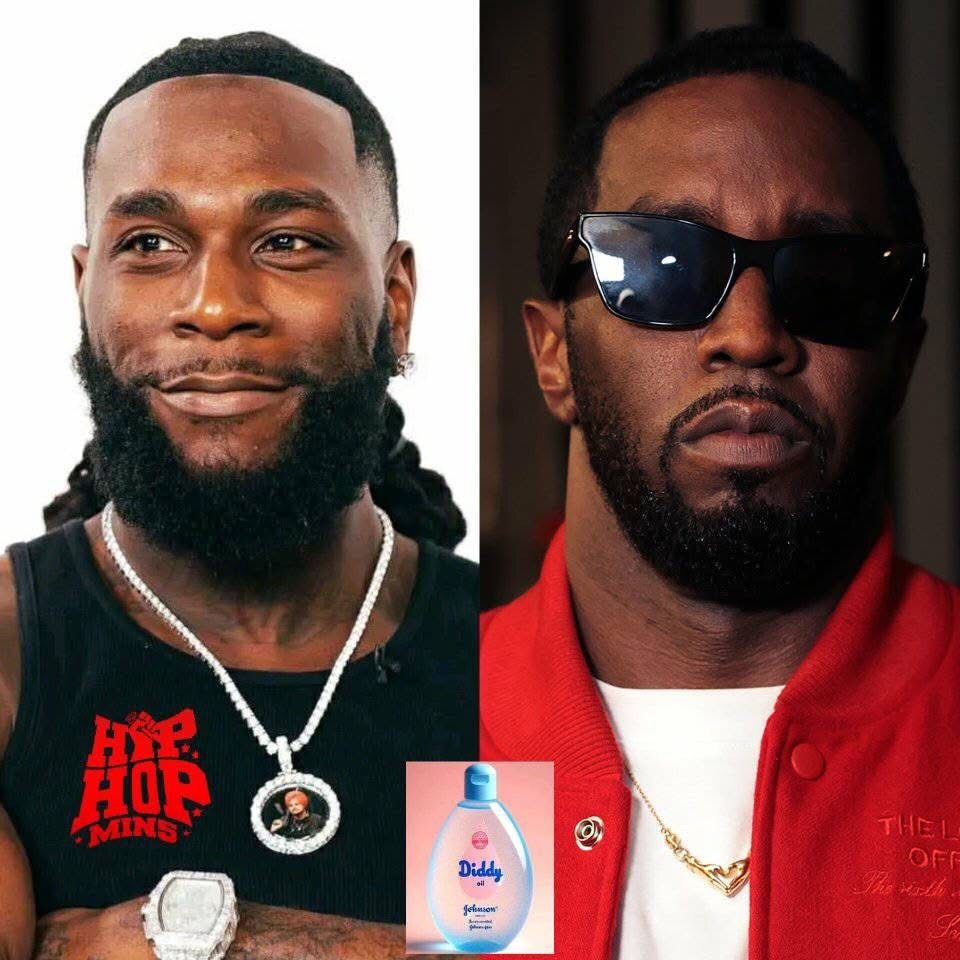
    Burna Boy, often referred to as the African Giant, has consistently made waves in the music industry. His Grammy win for Twice As Tall marked a significant milestone for both him and Afrobeat music. Recently, his comments about Sean “Diddy” Combs’ involvement in the Grammy-winning project have sparked conversations online, especially among fans of Burna Boy and Davido.

    What Did Burna Boy Say About Diddy and His Grammy Win?

    Burna Boy and His Grammy Journey: The Role of Diddy and the Debate It Sparked

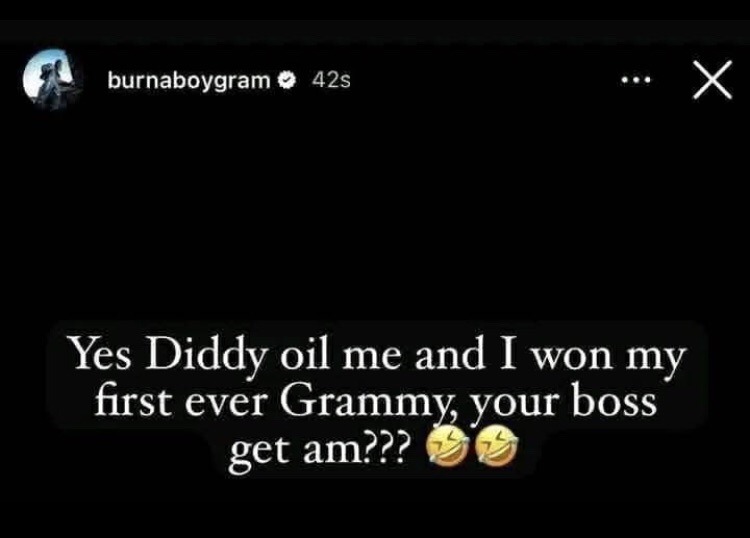
    During a heated exchange on social media, Burna Boy reportedly stated that Diddy “oiled and helped” him secure his first Grammy award. This comment was in response to a friend of Davido who questioned how Burna Boy achieved such a feat. The Afrobeat star allegedly went further to ask whether Davido, often regarded as one of his main rivals, has won a Grammy.

    The Role of Diddy in Twice As Tall

    Diddy played a crucial role as the executive producer of Burna Boy’s Twice As Tall. His involvement brought a level of international recognition and polish to the album, making it appealing to a global audience. From structuring the album’s flow to ensuring its appeal beyond African shores, Diddy’s contribution cannot be ignored.

    For Burna Boy, the collaboration represented a strategic move to expand his reach. However, his recent comments have reignited debates about the extent of Diddy’s influence and whether Burna Boy could have achieved the Grammy win without such a collaboration.

    Why the Comparison with Davido?

    The rivalry between Burna Boy and Davido is well-known among Afrobeat enthusiasts. Both artists have dedicated fanbases who passionately defend their favorites. Davido, despite his global hits and numerous accolades, has yet to win a Grammy, a fact Burna Boy highlighted in his response.

    This comparison has sparked widespread reactions, with fans of both artists debating their contributions to Afrobeat. For Burna Boy’s supporters, the Grammy win cements his place as a global Afrobeat icon. Davido’s fans, on the other hand, argue that accolades don’t define an artist’s impact.

    Burna Boy and His Grammy Journey: The Role of Diddy and the Debate It Sparked

    What Does This Mean for Afrobeat?

    The conversation surrounding Burna Boy’s Grammy win and Diddy’s involvement highlights a growing trend in Afrobeat: international collaborations. Artists like Wizkid, Tems, and Davido have also benefited from such partnerships, signaling Afrobeat’s steady rise on the global stage.

    For fans, the key takeaway might not be the rivalry but the fact that Afrobeat continues to thrive, breaking barriers and gaining recognition. Whether through collaborations or individual efforts, the genre is reaching audiences far beyond Africa.

  • Wizkid Makes History with 8 Billion Streams on Spotify

    Wizkid Makes History with 8 Billion Streams on Spotify

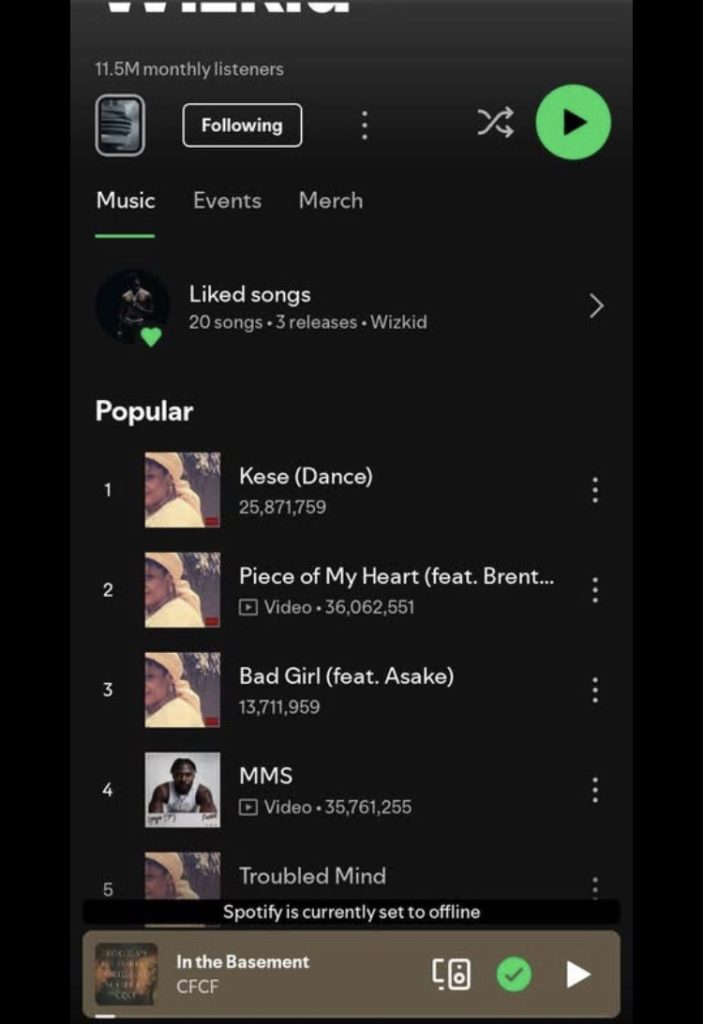
    Wizkid, one of Nigeria’s most celebrated musicians, has achieved an incredible milestone by amassing 8 billion streams on Spotify. This achievement places him among the elite global artists who have reached this level of streaming success, highlighting his influence in the music world.

    Wizkid Makes History with 8 Billion Streams on Spotify

    Wizkid’s Journey to Global Stardom

    Wizkid’s rise from his early days in Surulere, Lagos, to becoming a global icon is a testament to his talent and consistency. Bursting onto the scene with his debut single Holla at Your Boy, he quickly captured the hearts of fans with his distinct blend of Afrobeats, R&B, and pop influences.

    Over the years, he has released numerous chart-topping hits, including Ojuelegba, which received international recognition after Drake and Skepta shared their admiration for the song. Wizkid’s ability to craft infectious melodies and relatable lyrics has made his music resonate with audiences across different cultures and regions.

    The Impact of “Made in Lagos”

    A major contributor to this milestone is Wizkid’s fourth studio album, Made in Lagos. Released in 2020, the album features hits like Essence featuring Tems, which became a global anthem and earned a Grammy nomination. The deluxe edition, with additional tracks like Mood and Anoti, further boosted its popularity.

    “Made in Lagos” has been praised for its smooth production, Afrobeat rhythms, and collaborations with international stars like Burna Boy, Skepta, and Damian Marley. This album played a pivotal role in introducing Afrobeats to new audiences worldwide.

    Why 8 Billion Streams Matters

    Reaching 8 billion streams is not just a personal victory for Wizkid; it signifies the growing global acceptance of Afrobeats as a dominant genre. Platforms like Spotify have made it easier for Nigerian artists to connect with international fans, and Wizkid’s success is a prime example of this cultural shift.

    This milestone also showcases the dedication of Wizkid’s fanbase, often referred to as “Wizkid FC.” Their unwavering support has propelled his music to the top of charts and playlists worldwide.

    The Role of Collaborations in Wizkid’s Success

    Wizkid’s willingness to collaborate with artists across genres has significantly expanded his reach. From his groundbreaking feature on Drake’s One Dance to working with Beyoncé on Brown Skin Girl, these collaborations have introduced him to audiences who might not have discovered him otherwise.

    Wizkid Makes History with 8 Billion Streams on Spotify

    His strategic partnerships with global stars have also positioned him as a bridge between African music and the wider world. This approach has not only elevated his career but also opened doors for other African artists.

    Meanwhile, Burna Boy has reached 7.2 billion streams on Spotify, securing his place as the second most-streamed African artist on the platform. He is also the most-followed Afrobeats artist on Spotify.

    What’s Next for Wizkid?

    As Wizkid celebrates this monumental achievement, fans are eagerly awaiting his next move. His upcoming projects are expected to push boundaries even further, solidifying his place as a trailblazer in the global music scene.

    With Afrobeats gaining more recognition at major award shows and streaming platforms, Wizkid’s success story is a reminder that the world is ready for more African music.

  • Spotify Removes Millions of Streams from Davido’s Songs: What Does This Mean for the Artist and the Music Industry?

    Spotify Removes Millions of Streams from Davido’s Songs: What Does This Mean for the Artist and the Music Industry?

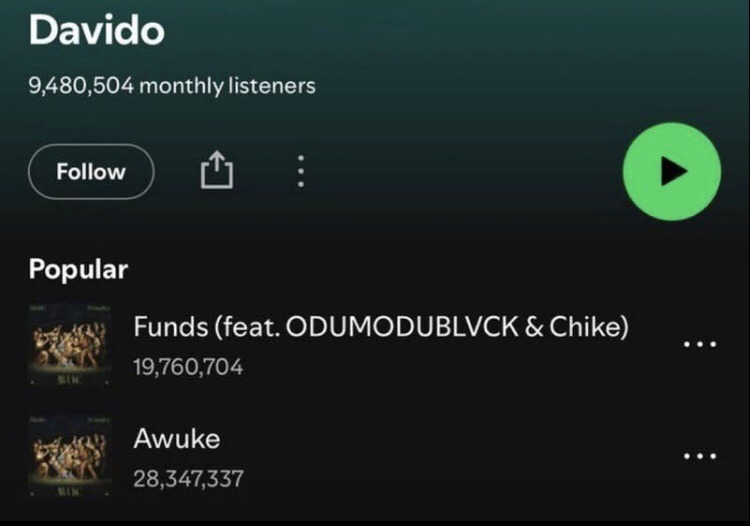
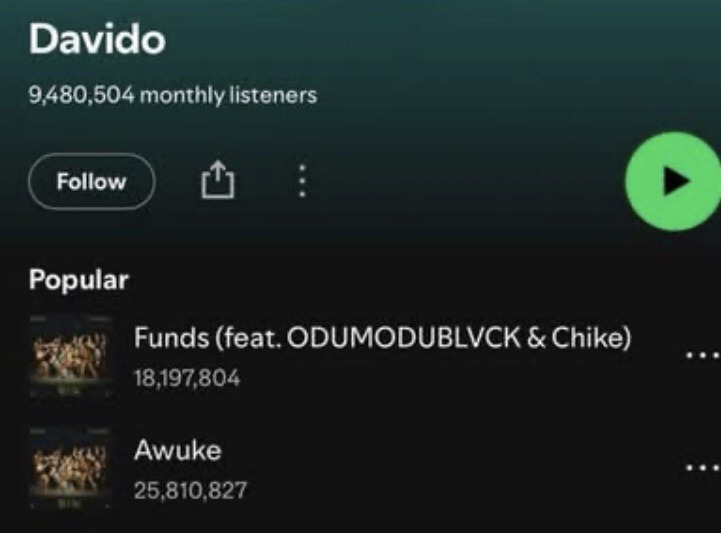
    Recently, Spotify took the significant step of removing over 4 million streams from two of Davido’s popular tracks—“Funds” and “Awuke.” This move has left many fans and industry experts wondering about the implications for the artist and the broader music scene. In this post, we’ll explore what might have caused the removal of these streams, what it means for Davido’s career, and what this could tell us about how streaming platforms are working to maintain fairness in the music industry.

    Why Did Spotify Remove Streams from Davido’s Songs?

    Spotify Removes Millions of Streams from Davido’s Songs: What Does This Mean for the Artist and the Music Industry?
    Before

    Spotify’s decision to remove millions of streams raises some important questions. Over 1.5 million streams were removed from “Funds,” while “Awuke” saw a significant cut of 3 million streams. This is not a common occurrence for major artists, especially one as prominent as Davido.

    One possible explanation is that these streams may have been flagged as part of a practice known as stream farming. Stream farming involves artificially inflating the number of plays on a song through the use of bots or paid listeners. This is something that has become an ongoing issue in the streaming industry as some artists or entities try to boost their numbers to appear more popular or increase their chart standings.

    Spotify Removes Millions of Streams from Davido’s Songs: What Does This Mean for the Artist and the Music Industry?

    For Spotify to take action, it would suggest that there were irregularities in the way these streams were generated. The company uses sophisticated algorithms and detection systems to identify fake streams. By removing these plays, Spotify is working to ensure that only legitimate listens are counted toward an artist’s metrics, protecting the credibility of the platform and the artists who follow the rules.

    The Impact on Davido’s Career

    After

    Davido has been one of the leading figures in Afrobeats, with a massive fanbase known as 30BG (30 Billion Gang). His music has garnered millions of streams worldwide, cementing his position as one of the most influential artists in the genre. While the removal of streams may raise eyebrows, it’s important to consider how this will affect Davido’s standing in the industry.

    Davido’s career is built on years of hard work, incredible talent, and a loyal fanbase. While this incident could cause some temporary embarrassment, it’s unlikely to drastically affect his overall success. His music continues to resonate with millions of fans, and his contribution to Afrobeats is undeniable. The controversy around this may even work in his favor, sparking more attention around his songs.

    The real impact here might be on the credibility of streaming platforms, as they are now more closely scrutinized than ever. The music industry is shifting towards more transparency, and streaming platforms like Spotify are under pressure to ensure fairness in how streams are counted. For artists like Davido, this could mean future efforts to maintain the integrity of streaming numbers.

    Will Fans Defend Davido?

    As expected, the 30BG fanbase has already voiced strong support for their favorite artist. This group has consistently shown fierce loyalty, so it’s no surprise that many believe Davido has been unfairly targeted in this situation. Fans argue that the artist himself may not have been involved in any fraudulent activity, but rather, it could have been done by others—whether bots or third parties—without his direct knowledge.

    Davido’s fans are known for going to great lengths to show support, whether it’s through social media campaigns or buying his albums. With such a dedicated following, this issue is likely to spark more engagement from fans, who will undoubtedly rally behind the artist.

    What Does This Mean for the Music Industry?

    Spotify’s actions send a clear message to the industry: streaming platforms are serious about tackling artificial inflation of streaming numbers. As the music industry becomes more reliant on streaming services for revenue and exposure, these platforms are working to maintain the integrity of their charts and metrics.

    Spotify Removes Millions of Streams from Davido’s Songs: What Does This Mean for the Artist and the Music Industry?

    The rise of stream farming has raised concerns among artists, labels, and listeners alike. While some see it as a way to manipulate the system, others argue that it’s a symptom of a flawed model that puts too much pressure on numbers rather than the quality of music. For Spotify and other streaming platforms, taking action against stream farming is an attempt to level the playing field, ensuring that the most popular songs are truly reflective of listeners’ preferences, not just the result of artificially inflated numbers.

    What’s Next for Davido?

    As one of the leading voices in Afrobeats, Davido’s music career will likely continue to thrive, regardless of this incident. While this controversy may spark debates about the ethics of stream farming and the role of streaming platforms in regulating their charts, it’s unlikely to change the trajectory of his success. The artist has already proven his resilience in the face of criticism, and his loyal fanbase is always ready to back him up.

    In the coming months, we can expect Davido to continue releasing new music and performing around the world. As the streaming industry evolves, artists like him will likely need to adapt to new standards and practices, but with his talent and support system, he’ll continue to make an impact in the music world.

  • Why Kendrick Lamar Was Chosen Over Lil Wayne for the Super Bowl Halftime Show

    Why Kendrick Lamar Was Chosen Over Lil Wayne for the Super Bowl Halftime Show

    The Super Bowl halftime show is one of the most-watched events in the world. Every year, it offers a platform for artists to showcase their talent on a massive stage. With a reputation for delivering performances that are as memorable as the game itself, the selection process for the halftime show headliner is carefully considered. This year, Kendrick Lamar was chosen over Lil Wayne to headline, and Grammy Art Director Shaun Harrison has explained why.

    Shaun Harrison’s Concerns About Lil Wayne’s Past Performance

    “I have worked with Lil Wayne before for Grammy performance and personal feelings that would be the biggest mistake ever putting him as the headliner for the biggest performance of the year The Super Bowl. He showed up to zero rehearsals we didn’t even think he would make the performance then last minute he was in the building and ran on stage for the performance and ran off back into oblivion.

    Kendrick is one of the greatest rap performers ever and unapologetically blàck in his message and it’s during blàck history months, it’s going to be a spectacule!”

    He does not think Wayne is a good choice, but gave Dot a go-ahead, wow!!

    Your though?

    Shaun Harrison, who has worked on Grammy performances, revealed a significant issue with Lil Wayne during a past collaboration. According to Harrison, Lil Wayne did not attend rehearsals and only showed up at the last minute for the performance. This lack of preparation raised concerns about his reliability for an event as demanding as the Super Bowl halftime show.

    The halftime show is not just about singing or rapping; it’s a complex production involving choreography, lighting, sound, and timing. Every detail needs to align perfectly. Missing rehearsals jeopardizes the quality of the performance, which could negatively impact the entire show.

    Why Kendrick Lamar Is a Great Fit for the Super Bowl Stage

    Kendrick Lamar has built a reputation as one of the most electrifying performers in hip-hop. His live shows are known for their energy, precision, and artistic vision. Beyond his performance skills, Kendrick’s music carries powerful messages that resonate with audiences around the world.

    This year’s Super Bowl coincides with Black History Month, making Kendrick an ideal choice. His body of work frequently addresses themes of social justice, identity, and empowerment. Having an artist whose music aligns with the significance of the month adds depth to the event.

    Professionalism and Relevance

    Why Kendrick Lamar Was Chosen Over Lil Wayne for the Super Bowl Halftime Show

    Kendrick Lamar is known for his professionalism and dedication to his craft. His ability to deliver consistently excellent performances makes him a safer choice for an event of this magnitude. The Super Bowl halftime show isn’t just entertainment; it’s a cultural moment that lives on in conversations for years.

    In contrast, Lil Wayne’s history of missing rehearsals could pose a risk. While Wayne is undeniably a legend in the hip-hop world, reliability is crucial for a show with such high stakes.

    What Fans Can Expect from Kendrick’s Performance

    Kendrick’s performances are often a mix of powerful visuals and deeply meaningful music. Fans can expect a setlist that highlights his biggest hits, paired with visuals that amplify the themes in his songs. The halftime show will likely showcase his ability to connect with the audience while delivering a performance that feels both intimate and monumental.

    Why Kendrick Lamar Was Chosen Over Lil Wayne for the Super Bowl Halftime Show

    Given Kendrick’s track record and the significance of the Super Bowl halftime show, this decision seems to be about ensuring the event lives up to its reputation. Fans of Lil Wayne may feel disappointed, but the choice highlights the importance of preparation, reliability, and thematic relevance.

    The Bigger Picture

    While both artists are iconic in their own ways, the decision to go with Kendrick Lamar speaks to the importance of professionalism and message in high-profile events. As the world watches, the Super Bowl halftime show becomes more than just music—it becomes a statement.

    Choosing Kendrick Lamar reflects a commitment to delivering a performance that not only entertains but also resonates deeply with its audience. Whether or not fans agree with the choice, it’s clear that Kendrick’s talent and dedication make him a standout headliner for this year’s show.

  • The Top 50 Most Streamed Rap Songs on Spotify in 2024: A Year in Review

    The Top 50 Most Streamed Rap Songs on Spotify in 2024: A Year in Review

    The year 2024 has been an incredible one for rap music, with artists breaking records, experimenting with sounds, and reaching global audiences like never before. Spotify’s final list of the Top 50 Most Streamed Rap Songs of 2024 offers a snapshot of what fans have been vibing to all year. Let’s break down the highlights, trends, and what these numbers mean for the genre’s future.

    The Top Contenders

    The standout track of the year, “Not Like Us,” with 984 million streams, shows how a hard-hitting beat and memorable lyrics can resonate across different listener demographics. Following it, “CARNIVAL” (657m) and “Like That” (631m) hold their ground as fan favorites, combining catchy hooks with innovative production styles.

    The Top 50 Most Streamed Rap Songs on Spotify in 2024: A Year in Review

    The list is filled with tracks that have dominated playlists, clubs, and social media challenges. From the hypnotic flows of “redrum” (612m) to the chart-topping energy of “Houdini” (530m), it’s clear that rap in 2024 has continued to evolve while staying true to its roots.

    Trends in 2024’s Rap Scene

    1. Collaborations: Many songs on the list, such as “BAND4BAND” and “Big Dawgs,” showcase the power of collaborations. These tracks brought together talents from different subgenres, appealing to wider audiences and boosting streaming numbers.

    2. Viral Moments: Tracks like “nee nah” and “Get It Sexyy” gained massive traction due to TikTok trends and dance challenges. The integration of music with social media has proven to be a game-changer for artists aiming for widespread recognition.

    3. Emotional Storytelling: Songs such as “Timeless” (383m) and “Family Matters” (129m) highlight a return to introspective themes. These tracks connect deeply with listeners, combining personal narratives with universal emotions.

    The Streaming Game

    Streaming platforms like Spotify have reshaped how rap music reaches audiences. Artists now have access to millions of potential listeners with the click of a button. The competition is fierce, with new releases dropping almost daily. For an artist to break into a list like this, they need more than just a great song—they need a strategy that includes consistent engagement with fans, impactful visuals, and savvy marketing.

    Artists Who Deserve Recognition

    While the list reflects the most streamed songs, it’s worth noting some names missing from this year’s lineup. Talented artists like Rema and Ladipoe, known for blending rap with Afrobeat elements, have had an outstanding year but didn’t make the cut. It’s a reminder that streaming numbers don’t always equate to cultural impact.

    On the other hand, fans have questioned whether tracks like “Think U The Sh*t” (107m) or “HISS” (109m) truly deserved their spots. This has sparked conversations about whether streaming figures should be the sole measure of a song’s value or success.

  • The Untold Story of Sky B and X-B: Betrayal in Nigeria’s Music Industry

    The Untold Story of Sky B and X-B: Betrayal in Nigeria’s Music Industry

    Sky B’s meteoric rise in the Nigerian music scene was as unexpected as it was unforgettable. His debut album Pray for Me, released in the early 2000s, captured the hearts of fans with hits like My Baby and You Promised Not to Go. While Sky B was hailed as Nigeria’s first commercial rapper, new revelations from his former music partner, X-B, have shed light on a story of betrayal and broken trust that challenges the narrative behind Sky B’s success.

    Latest Nigeria celebrity event photos

    Sky B and X-B: A Forgotten Partnership

    X-B, a lesser-known name in the industry, recently opened up about his past as Sky B’s collaborator. According to X-B, he and Sky B worked together on every track of the Pray for Me album. As a tenant in Sky B’s family compound in Port Harcourt, X-B contributed his vocals, including the chorus for My Baby, and his unique style to the project. He claims that his voice and contributions can still be heard in the intros and verses of the songs.

    Despite their partnership, X-B alleges that Sky B launched the album without his knowledge. The album’s release, funded by the sale of a piece of Sky B’s father’s land, marked the end of their collaboration. X-B reportedly discovered the betrayal on the very day of the album’s launch through a mutual acquaintance.

    A Story of Betrayal and Its Consequences

    The fallout between the two artists was swift and painful. X-B was evicted from Sky B’s father’s house shortly after, leaving him with no platform to address the betrayal. Meanwhile, Sky B went on to enjoy the spotlight, with fans believing he single-handedly created the album.

    However, X-B’s claims have been corroborated by some Port Harcourt-based artists who were familiar with the duo. They insist that X-B’s contributions were significant, and Sky B’s attempts to replicate his style after their split were less convincing.

    Sky B’s Struggles and Decline

    Sky B’s career, once promising, eventually took a downward turn. After the initial success of Pray for Me, he struggled to sustain his momentum. His personal life also became a subject of public scrutiny, with allegations of substance abuse and financial difficulties.

    X-B believes that the betrayal and unethical practices that marked the start of Sky B’s career contributed to his eventual decline. He sees the unraveling of Sky B’s career as a reflection of the consequences of dishonesty and broken trust.

    Lessons for the Nigerian Music Industry

    This story highlights the challenges faced by many upcoming artists in Nigeria. From lack of resources to fractured partnerships, the road to success is often fraught with difficulties. For X-B, the betrayal he experienced serves as a cautionary tale about the importance of integrity and collaboration in the music industry.

    The revelations about Sky B and X-B also bring up important questions about credit and recognition in creative projects. How many artists have been overshadowed or sidelined in similar ways? X-B’s story is a reminder of the need for transparency and fairness, especially in an industry as competitive as music.

    Moving Forward

    While Sky B’s story has largely faded from the spotlight, X-B’s revelations have reignited interest in his music and the Pray for Me album. Fans and industry insiders alike are now reevaluating Sky B’s legacy, with some calling for greater recognition of X-B’s contributions.

    For X-B, the focus remains on moving forward and letting time and truth heal old wounds. His story serves as both a warning and an inspiration for upcoming artists navigating the complexities of the Nigerian music scene.

  • How Fela Kuti’s Song Zombie Sparked a National Uproar in 1970s Nigeria

    How Fela Kuti’s Song Zombie Sparked a National Uproar in 1970s Nigeria

    In 1976, Fela Kuti released Zombie, a track that would go on to ignite one of the most intense reactions to music in Nigerian history. Known for his fearless political stance, Fela used his Afrobeat style to challenge Nigeria’s military rule with unprecedented directness. The song was a scathing critique of the military’s rigid obedience to orders, painting soldiers as “zombies” who followed commands without thinking. This metaphor struck a deep nerve, leading to a national uproar and brutal retaliation from the government.

    The Message of Zombie

    Zombie criticizes Nigeria’s military by comparing soldiers to mindless “zombies” who blindly follow commands. Fela uses simple but powerful lyrics to paint a picture of soldiers being sent on orders to “go and die,” “go and kill,” and obey without question. By likening soldiers to zombies, Fela was challenging not just the military, but the authoritarian nature of Nigeria’s leadership at the time, which was ruled by General Olusegun Obasanjo. The military regime had a stronghold on Nigerian society, and obedience was enforced without regard for individual thought or ethics. This kind of blind loyalty was precisely what Fela was fighting against, as he believed it enabled corruption and abuse of power.

    Latest Nigeria celebrity event photos

    The Public Reaction

    For many Nigerians, Zombie was a revelation. The song’s blunt message and Afrobeat rhythm quickly turned it into an anthem of resistance. It resonated with a society frustrated by years of military rule and yearning for freedom. Nigerians began to see the military not as protectors, but as enforcers of an oppressive regime. Zombie became a symbol of defiance, sparking discussions in homes, workplaces, and social gatherings across the country. This widespread appeal made Zombie more than just a song; it became a rallying cry for people tired of corruption and abuse.

    Latest Nigeria celebrity event photos
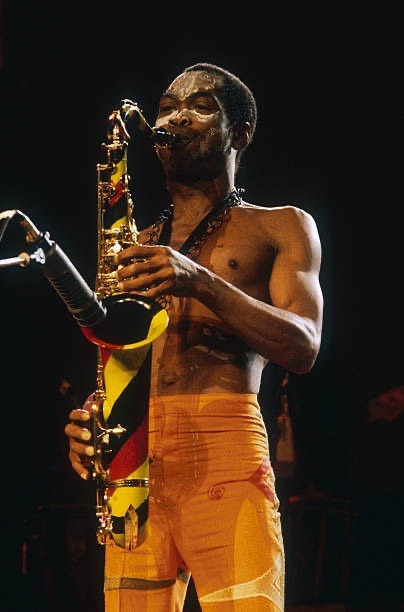
    Fela Kuti performs on stage, Paris, 1981. (Photo by Michael Putland/Getty Images)

    The military government, however, saw Zombie as a dangerous provocation. In their eyes, Fela’s critique threatened the respect and authority they commanded. The song became widely popular, but this popularity only intensified the government’s response to Fela and his music.

    The Brutal Backlash from the Government

    The government’s reaction to Zombie was swift and brutal. In 1977, in an attempt to silence Fela and punish him for his defiance, approximately 1,000 soldiers raided his commune, the Kalakuta Republic. This wasn’t just a home but a community that included his family, band members, and supporters. During the raid, soldiers burned down the commune, destroyed Fela’s belongings, and assaulted its residents.

    The attack was personal and devastating. Fela’s mother, Funmilayo Ransome-Kuti, a well-respected political activist, was thrown from a window, sustaining injuries that would lead to her death shortly afterward. The brutality of the attack shocked the nation and cemented Fela’s image as a courageous resistor in the face of oppression.

    Fela’s response was to double down on his message. He organized a symbolic procession where he and his followers carried a coffin to the residence of the then-head of state, Obasanjo, marking a powerful act of defiance. This act and the memory of the attack on Kalakuta became etched in the minds of Nigerians, further embedding Zombie as a landmark in Nigeria’s resistance history.

    The Legacy of Zombie and Its Uproar

    Latest Nigeria celebrity event photos

    Despite the efforts to suppress it, Zombie survived and became a permanent fixture in African music history. Fela’s courage inspired countless others to question authority and speak up against injustice. Even today, Zombie remains a powerful reminder of the cost of resistance and the enduring impact of art in challenging oppression.

    In the 1970s, Fela Kuti’s Zombie was much more than music—it was a catalyst for social change and a testament to the power of art to disrupt and inspire. Through this song, Fela gave Nigerians the voice and courage to question authority, and its influence still resonates in Nigerian culture and political discourse to this day.

  • Fela Kuti’s Banned Music: A Powerful Stand Against Nigeria’s Military Regime

    Fela Kuti’s Banned Music: A Powerful Stand Against Nigeria’s Military Regime

    Fela Anikulapo Kuti, the Nigerian Afrobeat pioneer, wasn’t just an artist; he was a force of nature who used his music as a tool for political resistance. In the Nigeria of the 1970s and ‘80s, when military rule was the norm and dissent was dangerous, Fela dared to use his voice to expose the government’s corruption, brutality, and injustice. His songs often became rallying cries for the people and a thorn in the side of the authorities. Several of his songs were outright banned by the Nigerian government, as they were seen as a threat to the established order.

    Fela Kuti’s Banned Music

    Here, we’ll look at some of the most controversial Fela tracks that were banned and the impact they had on Nigeria’s political and social climate.

    “Zombie” – The Song that Provoked the Military

    One of Fela’s most famous and controversial songs, Zombie was released in Nigeria by Coconut Records in 1976, and in the United Kingdom by Creole Records in 1977 and became an anthem of resistance.

    Latest Nigeria celebrity event photos

    The song criticizes the Nigerian military, likening soldiers to zombies who follow orders without thinking. With sharp lyrics and infectious rhythms, Fela’s message resonated with the public but infuriated the military. In the song, he calls soldiers “zombies” who are trained to follow commands like “Go and kill!” and “Go and die!”

    The government under General Olusegun Obasanjo saw this as a direct attack on their authority. The reaction was swift and brutal: 1,000 soldiers attacked Fela’s communal compound, the Kalakuta Republic. In the raid, his mother, Funmilayo Ransome-Kuti, a respected activist, was thrown from a second-story window, sustaining injuries that later led to her death. The compound was burned down, and Fela himself was severely beaten. Despite the consequences, Zombie remains a symbol of anti-authoritarianism and a reminder of Fela’s commitment to standing up against oppression.

    “Coffin for Head of State” – A Bold Critique of Corrupt Leadership

    In 1980, Fela released Coffin for Head of State, another explosive track aimed at Nigeria’s ruling elite. This song condemned the hypocrisy of political and religious leaders who, according to Fela, exploited their positions for personal gain while ignoring the suffering of ordinary Nigerians. He also criticized the government’s cozy relationship with the clergy, accusing both sectors of being complicit in the country’s problems.

    Latest Nigeria celebrity event photos

    The song’s title was inspired by an event where Fela and his followers carried a coffin to the residence of then-head of state Obasanjo, symbolizing the death of integrity and justice in Nigeria. Coffin for Head of State didn’t just criticize the government; it expressed a deep disappointment with religious institutions that Fela believed had abandoned their moral responsibilities. This song, too, was banned, as its powerful lyrics and imagery challenged both the government and the influential religious institutions.

    “International Thief Thief (I.T.T.)” – Calling Out Corruption

    International Thief Thief (I.T.T.) is another of Fela’s boldest works, taking aim at both the Nigerian government and multinational corporations operating in the country. The title plays on the acronym I.T.T., which was the name of the multinational company International Telephone and Telegraph, whose Nigerian operations were run by prominent businessman Moshood Abiola. In this song, Fela calls out corrupt officials and foreign companies for exploiting Nigeria’s resources, linking them to the suffering of ordinary Nigerians.

    This song went beyond criticizing individuals; it pointed fingers at systemic exploitation, where both local leaders and foreign companies collaborated to plunder the nation. The song was banned, but it cemented Fela’s status as a voice for the people and a critic of neocolonialism, corporate greed, and government corruption.

    “Unknown Soldier” – Exposing Military Brutality

    Unknown Soldier was Fela’s response to the government’s narrative that “unknown soldiers” were responsible for the attack on his Kalakuta Republic compound. In this song, he highlights the government’s attempts to evade responsibility for the destruction of his home, the physical assault on him, and the killing of his mother.

    Fela used Unknown Soldier to paint a vivid picture of the injustice he and his family endured, making it clear that the government was accountable. This song struck a chord with Nigerians who were already frustrated with the lack of accountability and transparency in the military regime. The government banned the song, viewing it as a direct accusation and a threat to their image. However, it served to rally support for Fela and his message, further strengthening his reputation as a fearless advocate for truth and justice.

    Latest Nigeria celebrity event photos

    The Impact of Fela’s Banned Songs on Nigerian Society

    Each of these songs resonated deeply with Nigerians, particularly those who felt oppressed by the military regime and the corrupt political system. Fela’s music spoke directly to the injustices that many Nigerians experienced but felt powerless to confront. By calling out powerful individuals and institutions, Fela gave a voice to the voiceless and became an icon of resistance.

    Despite the bans, Fela’s music continued to spread, gaining popularity through underground networks and word of mouth. His lyrics and fearless attitude inspired a generation of Nigerians

  • Youth Activism in Nollywood Films and The Impact of Hijack ’93

    Youth Activism in Nollywood Films and The Impact of Hijack ’93

    Hijack ’93 offers a fresh look at youth activism in Nollywood, bringing historical relevance to the screen and illuminating the courage of young Nigerians standing up for social and political change. By dramatizing the true story of the 1993 Nigerian Airways hijacking, Hijack ’93 reveals the potential and power of youth activism, highlighting a moment when young Nigerians took extreme measures to voice their frustrations.

    The Roots of Youth Activism in Nigeria

    Youth Activism in Nollywood Films and The Impact of Hijack ’93

    Youth activism in Nigeria has a strong foundation, born from decades of social, economic, and political challenges. Young people in Nigeria have consistently played a major role in pushing for change, often at great personal risk. This activism is often spurred by issues such as political corruption, lack of accountability, unemployment, and limited opportunities. As in many societies, young Nigerians recognize that their future is on the line, driving them to seek reforms that could shape a more equitable society.

    Related: Hijack ’93: A Look into Netflix’s New Nollywood Release on a Historical Event

    The Historical Background of Hijack ’93

    The film Hijack ’93 is rooted in a historical event that captures the energy and determination of Nigerian youth. In 1993, young Nigerian activists, frustrated with military rule and political instability, hijacked a Nigerian Airways flight in protest. The four people involved in the hijacking of the plane in 1993 are “Richard Ogu deru, Kabir Adenuga, Benneth Oluwadaisi and Kenny Rasaq-Lawal” This dramatic incident was one of the boldest statements of discontent, a clear signal of the lengths young people were willing to go to bring attention to their plight.

    Through this film, Nollywood recreates this moment in history, allowing audiences to see the bravery and determination that fueled this action. Hijack ’93 reminds viewers that the youth’s call for reform wasn’t just a fleeting movement—it was a well-thought-out stand for justice that echoes even today.

    How Hijack ’93 Portrays Youth Activism

    In Hijack ’93, viewers are taken into the minds and lives of the young activists who took part in the hijacking. The characters are portrayed as determined individuals, each with their own reasons for joining the protest. Some are driven by frustration with corruption, while others are moved by personal losses tied to the socio-political environment. This diverse set of motivations reflects the real-world reasons why young Nigerians engage in activism today.

    The film captures the strength, intelligence, and vision of these young individuals, showing them not as reckless troublemakers but as purposeful agents of change. In a society that sometimes dismisses youth activism as misguided, Hijack ’93 challenges this view by showing the depth of their motivations and the thoughtful planning that went into their protest. This perspective is especially significant because it empowers viewers to see youth activism as a necessary force in shaping Nigeria’s future.

    Youth Activism as a Driving Force for Social Change

    In Nigeria, youth activism is not just a phase; it is a powerful driver for change. Young activists often face significant challenges, including government repression, lack of resources, and limited support from older generations. However, Hijack ’93 emphasizes that these obstacles rarely deter the determination of young Nigerians. Their activism draws attention to issues that might otherwise go ignored, compelling society to confront and address problems that affect millions.

    Related: The Rise of Nollywood on Netflix: How Hijack ’93 is Taking Nigerian Stories to a Global Stage

    The movie also highlights the impact of youth activism beyond the immediate action. Although the hijacking itself was a high-stakes event, it set the stage for wider conversations about governance, human rights, and the role of young people in shaping the country’s future. This portrayal encourages young Nigerians to see activism as a meaningful way to participate in their country’s political landscape, no matter how difficult the journey may be.

    Nollywood as a Platform for Social Messages

    Nollywood has long been known for its ability to address social issues, often becoming a platform for discussions on family, relationships, and moral values. With films like Hijack ’93, Nollywood is stepping into a more political arena, using the power of cinema to discuss activism and historical events. By creating films that center on youth activism, Nollywood brings attention to stories that might otherwise be forgotten, reminding audiences of the courage required to stand up for change.

    Moreover, films like Hijack ’93 educate a new generation about past events that shaped the country. For young people watching this film, it serves as both inspiration and education, connecting them to a legacy of activism. It reminds them that they too can play a role in the country’s future by being active, informed, and courageous in the face of challenges.

    Why Youth Activism Matters in Today’s Nigeria

    In a rapidly changing Nigeria, the role of young people has never been more critical. Youth unemployment, poverty, and political unrest are just a few issues young Nigerians face today. These challenges are significant, and they require innovative solutions. Through the lens of Hijack ’93, Nollywood underscores that the activism of young people is not merely reactionary—it is a necessary force that encourages societal progress. When young people raise their voices, they not only represent their own interests but also speak on behalf of future generations.

    Youth Activism in Nollywood Films and The Impact of Hijack ’93

    Youth activism pushes society to confront uncomfortable truths and challenges leaders to address long-standing problems. Hijack ’93 emphasizes that, while the methods might vary, the desire for justice, fairness, and accountability remains constant. The film sends a powerful message: when young people come together, they have the power to change the course of history.

    The Legacy of Hijack ’93 and Youth Movements in Nigeria

    The story told in Hijack ’93 is a reminder of the legacy young people have created through their courage and resilience. This film adds to a growing body of Nollywood movies that document Nigeria’s history from the perspective of those who lived it. It connects past struggles with the present, reminding viewers that today’s activism is part of a larger story, a narrative of ongoing fight for justice and equity.

    The legacy of youth activism in Nigeria is one of hope, courage, and determination. Nollywood’s portrayal of this legacy is not only a celebration of past victories but a call to action for current and future generations. Through films like Hijack ’93, the stories of young Nigerian activists become a part of popular culture, inspiring audiences and encouraging them to believe in their power to make a difference.

  • The Rise of Nollywood on Netflix: How Hijack ’93 is Taking Nigerian Stories to a Global Stage

    The Rise of Nollywood on Netflix: How Hijack ’93 is Taking Nigerian Stories to a Global Stage

    Nollywood’s presence on Netflix has opened up a new era for Nigerian cinema, bringing culturally rich stories to audiences worldwide. This shift is more than just streaming numbers; it’s a powerful movement that allows Nigerian filmmakers to showcase authentic Nigerian experiences on a platform with global reach. One of the recent films leading this movement is Hijack ’93, a historical thriller that shares a real-life event from Nigerian history—the 1993 hijacking of a Nigerian Airways flight. This film stands as a prime example of how Nollywood uses Netflix to share important local narratives with international audiences, offering a look into Nigeria’s socio-political climate in a way that is both engaging and thought-provoking.

    Related: Hijack ’93: A Look into Netflix’s New Nollywood Release on a Historical Event

    How Hijack ’93 is Taking Nigerian Stories to a Global Stage

    How Netflix Brings Authentic Nigerian Stories to the World

    Netflix’s involvement with Nollywood has provided Nigerian filmmakers with a way to reach audiences who might not otherwise have access to these stories. This isn’t just about visibility—it’s about authenticity. For a long time, films about Africa or African cultures were often produced by international filmmakers who might miss the local context and culture, leading to oversimplified or inaccurate portrayals. Nollywood’s partnership with Netflix changes that by giving Nigerian filmmakers control over their narratives. Through these films, viewers gain insights directly from those who understand the culture and history, creating a more accurate representation.

    With Hijack ’93, Netflix brings viewers into the heart of a real historical event that had a deep impact on Nigeria. This story,

    On October 25, 1993, a Nigerian Airways flight en route from Lagos to Abuja was seized by four young Nigerian men named Richard Ogu deru, Kabir Adenuga, Benneth Oluwadaisi and Kenny Rasaq-Lawal, in other for the then military government to declare M.K.O Abiola the winner of the just concluded general election which was said is the only free and fair election held in Nigeria till date

    set during a politically tense time in Nigerian history, carries a universal appeal due to its themes of justice, resilience, and the human spirit. For Nigerians, it brings a sense of pride and recognition to see their history presented on a global stage. For international audiences, it’s an opportunity to connect with a lesser-known part of Africa’s story, building empathy and awareness.

    What Hijack ’93 Represents for Nollywood’s Global Future

    The success of Hijack ’93 on Netflix reflects Nollywood’s potential for international success. While it’s a film deeply rooted in Nigerian history, the story also taps into universal emotions and experiences—making it accessible to viewers around the world. The characters in Hijack ’93

    Related: Hijack ’93: A Look into Netflix’s New Nollywood Release on a Historical Event

    Sharon Ooja, Nancy Isime, Bob Manuel Udokwu, John Dumelo,Efa iwara,Nnamdi Agbo etc.

    Are not just Nigerian; they’re relatable human figures dealing with fear, courage, and the need for justice. These universal themes help break down barriers, allowing people from different cultures to see themselves in the characters and events of the story.

    With Netflix’s backing, Nollywood now has the resources to improve production quality, resulting in better visuals, sound, and storytelling that meet international standards. As Nigerian filmmakers gain access to better technology and funding, the quality of films like Hijack ’93 increases, attracting more viewers and building interest in Nollywood’s offerings.

    How Hijack ’93 Boosts Nigerian Representation in Global Media

    One of the most significant impacts of Netflix’s partnership with Nollywood is the increase in African representation in global media. For years, African stories have often been told from an outside perspective, leading to stereotypes or misunderstandings about African cultures. But films like Hijack ’93 bring genuine Nigerian experiences directly to the screen, allowing audiences to experience the complexity and richness of Nigerian life, history, and culture.

    With Hijack ’93, viewers are introduced to a historical moment that many outside Nigeria may not be familiar with. The film sheds light on the political struggles Nigeria faced in the 1990s, including the tension and challenges that influenced Nigerian society. This kind of representation allows global audiences to understand Nigeria from a new perspective, building a more accurate view of the country beyond the stereotypes often shown in mainstream media.

    Related: Youth Activism in Nollywood Films and The Impact of Hijack ’93

    The Future of Nollywood on Streaming Platforms

    Hijack ’93 marks a significant step forward, but it’s just the beginning. Netflix has recognized the potential in Nollywood’s storytelling, and this partnership is expected to expand. As more Nigerian films make their way to global audiences through streaming platforms, Nollywood will continue to grow as an industry, becoming more influential not only within Africa but worldwide.

    Nollywood’s success on Netflix also means more opportunities for Nigerian filmmakers to explore diverse genres and themes, from action and thriller to romance and sci-fi. With the success of films like Hijack ’93, we’re likely to see a wider range of Nigerian stories that explore all aspects of Nigerian life, creating a more complete picture of what the country has to offer.

  • Michael Jackson’s”thriller Disclaimer: The untold story

    Michael Jackson’s”thriller Disclaimer: The untold story

    On December 3, 1983, Michael Jackson’s “Thriller” music video premiered and forever changed the music and entertainment industries. However, few people know the story of why Jackson, one of the most creative artists of his generation, was required to include a disclaimer in the video distancing it from any endorsement of the occult.

    This decision was influenced by Jackson’s religious beliefs and his affiliation with the Jehovah’s Witnesses, a Christian denomination that held strict views on supernatural themes and imagery.

    Michael Jackson's"thriller Disclaimer: The untold story

    The Influence of Religion on Michael Jackson’s Career

    During the early 1980s, Michael Jackson was a member of the Jehovah’s Witnesses, a group known for its adherence to a literal interpretation of the Bible. This religious background shaped many aspects of his life and career, particularly the way he approached creative projects.

    The release of the “Thriller” video, with its elaborate scenes of werewolves, zombies, and eerie settings, sparked concern among the church elders. They believed that the video’s themes could be interpreted as promoting occult practices, which contradicted their teachings.

    Why the Disclaimer Was Added

    Facing immense pressure from the church elders, Jackson reluctantly agreed to include a disclaimer at the start of the video. The statement reads:

    Due to my strong personal convictions, I wish to stress that this film in no way endorses a belief in the occult.”

    This disclaimer was a direct response to the church’s concerns. Jackson wanted to maintain his membership in the church while also ensuring the artistic integrity of the video.

    The Impact on Jackson’s Personal and Professional Life

    While the disclaimer may have appeased the elders, it highlighted a growing tension between Jackson’s artistic vision and the restrictions imposed by his faith. Reports from those close to him suggest that the situation caused significant stress, as he felt torn between his loyalty to the church and his desire to create groundbreaking art.

    Eventually, these conflicts contributed to Jackson distancing himself from the Jehovah’s Witnesses later in his career. This decision allowed him more creative freedom, though it came at the cost of severing ties with a community that had been a significant part of his life.

    “Thriller”: A Cultural Milestone

    Michael Jackson's"thriller Disclaimer: The untold story

    Despite the controversy, the “Thriller” music video remains one of the most iconic works in entertainment history. Directed by John Landis and featuring choreographed sequences that are still replicated today, it broke new ground for the music industry.

    The video helped Thriller become the best-selling album of all time, solidifying Jackson’s status as the King of Pop. Its innovative storytelling, paired with unmatched music and dance, set the standard for music videos and reshaped how artists approached visual media.

    While the disclaimer may seem like a minor detail today, it represents a pivotal moment in Jackson’s life. It shows his efforts to respect his faith while pursuing his passion for pushing creative boundaries.

  • Chris Brown and Lojay’s Epic Collaboration: “Sensational” Lights Up Johannesburg

    Chris Brown and Lojay’s Epic Collaboration: “Sensational” Lights Up Johannesburg

    Chris Brown surprised fans in Johannesburg last night by bringing Nigerian Afrobeat sensation Lojay on stage at the FNB Stadium. Together, they performed their hit track, “Sensational,” thrilling the crowd with a live rendition that perfectly blended Lojay’s Afrobeat rhythms with Chris Brown’s signature R&B style.

    The performance was part of Chris Brown’s global tour, and it showcased the seamless fusion of African sounds with international music. Fans in the audience were ecstatic as the two artists delivered an electrifying performance, making the moment a highlight of the night.

    https://www.instagram.com/p/DDktpdtyLU_/?igsh=MXd3N2l3cW1xdHEwZw==

    Why “Sensational” Resonates Globally

    Sensational” is a collaboration that has captivated listeners worldwide. Its catchy melody, smooth production, and heartfelt lyrics have made it a favorite on streaming platforms and airwaves. The track reflects a growing trend where international artists embrace Afrobeat, highlighting the genre’s global appeal.

    Lojay, known for his unique voice and ability to create memorable hooks, brought his A-game, complementing Chris Brown’s polished vocal delivery. Their partnership on the track has proven to be a masterstroke, blending the best of Afrobeat and contemporary R&B.

    A Night to Remember in Johannesburg

    The FNB Stadium, renowned for hosting large-scale events, provided the perfect setting for this remarkable moment. Fans at the venue sang along word-for-word, showcasing the song’s popularity in South Africa and beyond. The collaboration symbolizes a bridge between African and global music scenes, and the energy in the stadium reflected that connection.

    As videos from the performance circulate online, the demand for similar collaborations is growing. Many fans are now calling for Chris Brown to include Nigeria on his tour. One fan said,

    “Chris Brown, please make a bus stop in Nigeria so we can experience the Bezzy effect.”

    Will Chris Brown Bring the Show to Nigeria?

    With the overwhelming response from fans in South Africa, it’s no surprise that Nigerian fans are eager to see Chris Brown and Lojay perform live in their country. Nigeria, being the heart of Afrobeat, would provide an electric atmosphere for such a performance.

    Bringing “Sensational” to a Nigerian stage could also highlight the growing influence of Nigerian artists on the global music scene. From Lagos to Los Angeles, Afrobeat has become a dominant force, and artists like Lojay continue to push the genre forward.

  • The Story Behind 2Baba’s “Only Me”: A Lesson on Fame, Respect, and Self-Expression

    The Story Behind 2Baba’s “Only Me”: A Lesson on Fame, Respect, and Self-Expression

    2Baba, one of Nigeria’s most celebrated music icons, has always been known for creating songs that resonate with people on a personal and emotional level. His hit track, “Only Me,” is no exception. While fans have long enjoyed the song’s message of individuality and self-reliance, few know the deeply personal story behind its creation.

    Latest Nigeria celebrity event photos

    In a rare and heartfelt revelation, 2Baba shared an experience that left a lasting impact on him. This event, involving Nigerian football legend Mikel Obi, offers insight into the realities of fame, human interaction, and how artists channel emotions into their work.

    What Happened Between 2Baba and Mikel Obi?

    2Baba and Mikel Obi were two Nigerian stars excelling in their respective fields. While 2Baba was making waves internationally with his music, Mikel was winning hearts as a footballer at the peak of his career. Both were flagbearers of Nigerian talent, representing the country on the global stage.

    During a visit to the U.K., 2Baba spotted Mikel Obi at a shopping mall. For 2Baba, this was a moment of pride and excitement. He walked up to Mikel, eager to greet a fellow Nigerian who was also achieving remarkable success. However, to his dismay, Mikel ignored him.

    This interaction—or lack of it—left 2Baba feeling hurt and confused. He couldn’t understand why Mikel would act that way. Despite being an established icon, the experience reminded 2Baba that even celebrities are not immune to feelings of rejection.

    Turning Pain into Music: The Birth of “Only Me”

    Rather than dwelling on the incident, 2Baba decided to express his emotions in the best way he knew: through music. The result was “Only Me,” a song that encourages listeners to embrace their individuality and not rely on external validation.

    In the lyrics, 2Baba reflects on the importance of standing strong, even when others fail to recognize or support you. The song’s message resonates universally, making it one of his most relatable tracks. While the song doesn’t explicitly reference Mikel or the incident, it captures the essence of what 2Baba felt at the time—a mix of disappointment and a renewed focus on self-worth.

    Why This Story Matters

    This story sheds light on the human side of fame. Celebrities, despite their success, still crave connection and respect from their peers. 2Baba’s experience with Mikel Obi is a reminder that recognition and kindness are powerful, even among the most accomplished individuals.

    For fans, this revelation adds a new meaning to “Only Me.” The song becomes not just a catchy tune but a reflection of personal growth, resilience, and the ability to turn negative experiences into something positive.

    The Legacy of “Only Me”

    Years after its release, “Only Me” remains one of 2Baba’s standout tracks. Its timeless message continues to inspire fans around the world. By sharing the story behind the song, 2Baba reminds us that behind every hit lies a story of real-life experiences and emotions.

    Whether you’re a fan of Afrobeats or simply someone navigating life’s ups and downs, the message of “Only Me” is clear: you have the power to shine, even when it feels like you’re standing alone.

  • How to Dress Like Ayra Starr on a Budget: Street Style Inspiration

    How to Dress Like Ayra Starr on a Budget: Street Style Inspiration

    Ayra Starr has become a fashion icon, with her bold street style turning heads and inspiring many. Whether she’s performing on stage or sharing candid moments on social media, her outfits scream confidence and creativity. The good news is, you don’t need a massive budget to replicate her looks. In this guide, we’ll show you how to achieve Ayra Starr’s signature style without breaking the bank.

    1. Go for Crop Tops and Bralettes

    Crop tops and bralettes are staples in Ayra’s wardrobe, perfect for pairing with high-waisted pants or skirts. They exude youthful energy and are incredibly versatile.

    Where to Shop: Look for crop tops in thrift stores, or repurpose old T-shirts by cutting them to your preferred length.

    Styling Tip: Pair a plain crop top with bold accessories or layer it under a sheer blouse for added flair.

    2. Opt for Baggy Pants or Cargo Trousers

    Ayra often balances fitted tops with oversized bottoms like cargo pants. This mix of styles creates an effortless streetwear vibe.

    Ayra starr sexy photo

    Budget-Friendly Options: Local thrift markets, street vendors, or budget-friendly online stores often stock stylish oversized trousers.

    Style Hack: If you have old jeans, try customizing them with patches or a loose fit to emulate Ayra’s edgy aesthetic.

    3. Incorporate Statement Jackets

    Oversized denim or leather jackets are another hallmark of Ayra’s wardrobe. They can transform even the simplest outfit into something eye-catching.

    Affordable Finds: Vintage shops or clearance sales are great places to find unique jackets.

    DIY Ideas: Add patches, studs, or paint designs onto plain jackets to make them unique.

    Ayra starr sexy photo

    4. Choose Platform Sneakers or Combat Boots

    Shoes play a major role in Ayra’s style. Platform sneakers or combat boots are her go-to choices, adding a bold touch to any outfit.

    Where to Shop: Budget-friendly brands like Fila or Converse offer affordable options, and you can also explore thrift stores for unique finds.

    Style Tip: Stick to neutral tones like black or white for versatility.

    5. Accessorize Boldly

    Ayra starr sexy photo

    Ayra’s outfits are often complemented by bold accessories such as layered necklaces, chunky rings, and colorful sunglasses.

    Affordable Options: Markets and budget stores often have stylish accessories at low prices.

    Style Advice: Focus on one or two statement pieces to avoid overloading your look.

    6. Play with Mini Skirts and Slit Dresses

    Ayra’s playful side often shines through in her choice of mini skirts and slit dresses. These pieces are flirty and perfect for casual outings.

    Budget Shopping: Look for affordable skirts and dresses during sales or at thrift stores.

    Customizing Tip: Use fabric glue or a sewing machine to add slits to older dresses for a refreshed look.

    7. Invest in Graphic Tees

    Graphic tees with bold prints are a big part of Ayra’s style. They’re easy to wear and give off an effortlessly cool vibe.

    Where to Buy: Thrift stores, budget-friendly brands, or even online marketplaces have affordable options.

    DIY Option: Create your own by printing designs on plain shirts using transfer paper.

    8. Experiment with Hairstyles and Makeup

    Ayra starr sexy photo

    Ayra’s style is not just about clothing; her hair and makeup complete her look. Bold eyeliner, glossy lips, and unique hairstyles are her trademarks.

    Affordable Hair Tips: Try braiding styles or temporary hair dyes to mimic her playful looks.

    Budget Makeup: Drugstore brands often have high-quality products at a fraction of the cost.

  • Drake Accuses Universal of Boosting Kendrick Lamar’s Streams Using Bots

    Drake Accuses Universal of Boosting Kendrick Lamar’s Streams Using Bots

    In a significant development within the music industry, Drake has accused Universal Music Group (UMG) of using bots to artificially inflate streaming numbers for Kendrick Lamar’s diss track, Not Like Us. According to Drake, UMG allegedly paid third parties to achieve 30 million Spotify streams shortly after the song’s release. This tactic, he claims, was meant to amplify the track’s visibility and chart performance.

    Related: How Streaming Farms Inflate Play Counts and What It Means for the Music Industry

    UMG has strongly denied these claims, labeling them baseless and affirming its commitment to ethical promotional practices. The controversy has sparked widespread debate, particularly around the transparency of streaming platforms and how they impact artists’ revenues.

    The Debate on Streaming Integrity

    Streaming has revolutionized how music is consumed, but accusations like these highlight ongoing concerns about its fairness. Critics argue that artificially boosting streams undermines organic listener engagement and distorts competition among artists.

    Music expert Catherine Moore from the University of Toronto suggests that identifying bot-generated streams could offer insight into how automated playlists influence track popularity. Such revelations could pressure platforms to adopt stricter measures to ensure streams reflect genuine listener choices.

    Implications for Artists and Fans

    If the allegations hold, smaller artists may face even greater challenges in gaining visibility. Fans, too, may question the authenticity of trending tracks, especially if promotional strategies are not disclosed. For established artists like Drake and Lamar, the stakes involve not only financial gains but also public perception and credibility.

    Related: Understanding Streaming Farms: What They Are, How They Work, and the Risks Involved

    Kendrick Lamar’s Not Like Us has already broken records, becoming a viral hit and earning multiple accolades. However, Drake’s accusations have shifted focus onto the methods behind its success, adding tension to their ongoing rivalry.

  • Drake vs. Kendrick Lamar: Understanding the Legal Dispute Over Not Like Us

    Drake vs. Kendrick Lamar: Understanding the Legal Dispute Over Not Like Us

    The ongoing tensions between Drake and Kendrick Lamar have reached a new peak with a legal filing by Drake concerning Lamar’s track Not Like Us. This situation not only involves accusations of unethical practices but also highlights the competitive nature of the music industry.

    Drake

    Why Is Drake Taking Action?

    Drake’s concerns stem from two key points:

    1. Defamation Claims: Drake alleges that Not Like Us includes lyrics directly attacking his reputation. While artistic rivalries are common in music, defamation lawsuits in this context hinge on whether the lyrics present false statements as facts that harm someone’s reputation.

    2. Unfair Promotion Accusations: In papers filed in New York, Drake’s company, Frozen Moments LLC claims Universal Music Group (UMG) and Spotify manipulated streaming data to favor Not Like Us. Allegedly, bots, paid promotions, and undisclosed financial dealings boosted the song’s popularity. Furthermore, Drake has argued that when users requested his music through voice assistants, they were redirected to Kendrick’s song.

    Universal Music Group’s Response

    UMG, which distributes Kendrick Lamar’s music through its Interscope label, has firmly denied Drake’s allegations. A spokesperson labeled these claims as “offensive” and insisted the company adheres to ethical promotional practices. This response underscores the challenge of proving such allegations in court, especially in an era where streaming data can be opaque.

    Spotify and Lamar have yet to respond.

    What Is Not Like Us?

    Kendrick Lamar’s Not Like Us has quickly become a major hit, debuting at No. 1 on the Billboard Hot 100 and earning Grammy nominations. The song is celebrated for its sharp lyrics and has fueled speculation about its intended targets. Kendrick is known for his thought-provoking, often confrontational style, and this track is no exception.

    Kendrick Lamar

    How Streaming Manipulation Allegations Could Impact the Industry

    If Drake’s accusations hold merit, this case could reshape conversations around streaming practices. Streaming platforms like Spotify and distributors such as UMG face scrutiny over their role in promoting artists. Transparency in how music gains traction on these platforms is crucial to maintain trust between fans, artists, and the industry.

    What Are Pre-Action Filings?

    Drake’s legal move is classified as a “pre-action filing.” This step allows him to request information before filing a formal lawsuit. It signals serious intent but also indicates he may still be gathering evidence. These filings could involve obtaining internal data from UMG and Spotify to verify claims of artificial boosting.

    Related: How Streaming Farms Inflate Play Counts and What It Means for the Music Industry

    The Rivalry Between Drake and Kendrick Lamar

    Drake and Kendrick Lamar have a long-standing rivalry rooted in their distinct approaches to music. Kendrick’s work often challenges societal norms and delves deep into storytelling, while Drake’s music leans heavily on personal experiences and emotional relatability. This clash of styles has made them two of the most influential figures in modern hip-hop.

    What Happens Next?

    While Drake’s filing is not yet a full-fledged lawsuit, it has already sparked widespread discussion. If he proceeds with a lawsuit.

  • Shallipopi’s Hustle: A Story of Resilience, Hard Work, and Pride

    Shallipopi’s Hustle: A Story of Resilience, Hard Work, and Pride

    Shallipopi also mentions performing freestyle gigs in Benin clubs, earning as little as ₦5,000, which he gave to his mother.

    Shallipopi, a rising star in Nigeria’s music scene, has captured attention not only for his catchy tracks but also for his raw and relatable storytelling. Recently, the artist took to social media to share a glimpse of his journey—a story filled with struggles, resilience, and an unwavering determination to succeed. His words resonate with many Nigerians who have faced similar challenges, making his message both inspiring and timely.

    Who is Shallipopi?

    Shallipopi, whose real name is Crown Uzama, is a fast-rising Nigerian artist who came into the spotlight with viral hits like Elon Musk and Obapluto. His style blends street lingo, relatable storytelling, and catchy flows that instantly connect with young listeners.

    He is not just an artist; he’s a symbol of determination for anyone trying to rise from the streets into greatness.

    Related: Tyla’s “Push 2 Start” Joins the Official NBA 2K26 Soundtrack

    A Hustler’s Journey

    In his tweets, Shallipopi recounts his experiences doing various jobs to make ends meet. From working as a bricklayer, painter, and plasterer to running small gigs in clubs, he hustled relentlessly to support his family. His story reflects a common reality in Nigeria, where young people often take on multiple roles in their pursuit of survival and success.

    Latest Nigeria celebrity event photos

    The artist also mentions performing freestyle gigs in Benin clubs, earning as little as ₦5,000, which he gave to his mother. This act of selflessness highlights his commitment to family and his pride in contributing, no matter how small the amount might seem. For many, this is a reminder that every step in the journey matters, no matter how insignificant it may appear to outsiders.

    How did Shallipopi start his music career?

    Like many Nigerian artists, Shallipopi’s journey didn’t start overnight. He began making music in his neighborhood, using simple tools and sharing freestyles on social media. What stood out was his confidence and originality — even when he had no industry connections.

    He pushed through rejection, lack of recognition, and the struggles of an underground artist until his music started catching fire online.

    Resilience in the Face of Judgment

    One of Shallipopi’s tweets addresses societal judgment, as he boldly rejects any attempt to shame his struggles. He calls out those who look down on others, reminding them that every hustler has their story. This message is particularly powerful in a country where societal pressure and judgment can weigh heavily on individuals trying to navigate life’s challenges.

    By stating that he has traveled across Nigeria’s 36 states in search of opportunities, Shallipopi demonstrates his deep understanding of the country’s realities. His hustle is not just about survival; it’s a testament to the grit required to rise above difficult circumstances. He encourages others to “buckle up,” emphasizing that Nigeria’s tough environment demands resilience and hard work.

    Related: Nigerian Celebrity Gist: Latest News, Gossip & Entertainment Updates

    Humor as a Shield

    In a lighthearted but pointed remark, Shallipopi humorously questions why some people assume they are smarter than others. This reflects a common experience for many who feel judged or underestimated. By using humor, he connects with his audience, making his message more relatable and less confrontational. It’s a reminder that even in the face of criticism, staying confident and lighthearted can be a powerful response.

    Reported by Anything Celebrity – Nigeria’s hub for entertainment gist and celebrity updates.

    See more on Anything Celebrity entertainment news.

  • Wacced out murals: Lil Wayne and Kendrick Lamar’s Super Bowl Mention: What You Need to Know

    Wacced out murals: Lil Wayne and Kendrick Lamar’s Super Bowl Mention: What You Need to Know

    The release of Kendrick Lamar’s surprise album GNX has reignited discussions around his perceived rivalry with Lil Wayne. With lyrical references that acknowledge Wayne’s influence while addressing the controversial decision to feature Kendrick in the 2025 Super Bowl halftime show in New Orleans, fans have been eager to dissect the evolving narrative. Here, we explore the key moments of this story and what it reveals about the relationship between these two legendary artists.

    What Happened Between Kendrick Lamar and Lil Wayne?

    Kendrick’s track “Wacced Out Murals,” the opener to GNX, makes direct mention of Lil Wayne’s impact, reflecting on the era of Tha Carter III. Kendrick raps about the irony of his hard work seemingly overshadowing Wayne’s ambitions, particularly when it comes to the Super Bowl halftime show. The lyrics suggest Kendrick is aware of how his selection might be viewed in Wayne’s hometown, adding depth to his reflection on the pressures of success in the industry.

    He said in his lyrics in wacced out murals “Used to bump Tha Carter III, I held my Rollie chain proud / Irony, I think my hard work let Lil Wayne down / Whatever though, call me crazy, everybody questionable / Turn me to an esk—, I drew the line and decimals,” Lamar raps in the second verse.

    “Won the Super Bowl and Nas the only one congratulated me / All these n—-s agitated, I’m just glad they showin’ they faces,” he adds on the track.

    Lil Wayne and Kendrick Lamar’s Super Bowl Mention: What You Need to Know

    Lil Wayne, meanwhile, has spoken openly about his disappointment in not being chosen for the event. In a heartfelt message shared on social media, Wayne described the moment as a significant personal letdown, expressing gratitude for the support of fans while grappling with the emotional impact of being sidelined.

    Lil Wayne’s Response

    In the wake of Kendrick’s album release, Lil Wayne posted a cryptic message on his social platforms:

    “Man wtf I do?! I just be chillin & dey still kome 4 my head,” the rapper wrote to his followers on X (formerly Twitter). “Let’s not take kindness for weakness. Let this giant sleep. I beg u all.”

    “I shall destroy if disturbed.”

    While the post does not explicitly address Kendrick, it has fueled speculation that Wayne is doubling down on his determination to prove his dominance. This statement aligns with Wayne’s longstanding persona as a resilient, competitive artist who thrives under pressure.

    Wayne’s fans have rallied around him, emphasizing his contributions to hip-hop and his right to represent his city on a global stage. Many view his words as a signal that he remains a force to be reckoned with, even when facing disappointment.

    The Bigger Picture

    The relationship between Kendrick Lamar and Lil Wayne has always been nuanced, marked by mutual respect and competitive energy. Kendrick’s acknowledgment of Wayne’s influence on GNX suggests admiration, even as he addresses the tensions that come with navigating shared spaces in the music industry.

    For Wayne, the Super Bowl incident seems to symbolize larger frustrations about recognition and legacy. As one of New Orleans’ most celebrated artists, his absence from the event is a point of contention not just for him but for his fans, who feel his contributions to the city’s cultural identity merit such a platform.

    Why Does This Matter?

    The exchange between Kendrick and Wayne highlights the complexities of success in the music world. For Kendrick, being chosen for the Super Bowl halftime show represents a career milestone, but it also comes with the burden of living up to expectations in a city that holds Wayne in such high regard.

    For Wayne, it underscores the challenges of staying relevant in an ever-changing industry where opportunities can feel politically driven. His cryptic statement serves as a reminder of his enduring presence and ability to inspire discussions, even when he’s not center stage.