Tag: ckay

  • CKay Speaks on Afrobeats Origins: What He Said and Why It Sparked Debate

    CKay Speaks on Afrobeats Origins: What He Said and Why It Sparked Debate

    CKay said Afrobeats didn’t start with today’s popular artists and that many people misunderstand its history. He pointed out that Afrobeats grew from early 2000s Nigerian and Ghanaian sounds, influenced by Highlife, Hip-hop, and Dancehall, with pioneers like 2Baba and producers like OJB Jezreel shaping the foundation before it went global.

    Watch the video clip below…

    CKay has added his voice to one of the most discussed topics in African music: where Afrobeats actually started and who gets credit for it. His statement — that Afrobeats did not begin with the artists most fans mention today — has reopened conversations about history, sound, and recognition in Nigerian music.

    At the center of this discussion are two different sounds often mixed together: Afrobeat, created by Fela Kuti in the 1960s, and Afrobeats, the modern genre that grew out of Nigeria and Ghana in the early 2000s.

    What did CKay actually say about Afrobeats?

    CKay said Afrobeats did not start with the current generation of popular artists. He also suggested that many people speaking loudly about the genre online do not fully understand its history.

    His comments focus on how the genre is often discussed today. Many fans associate Afrobeats mainly with recent global stars, while earlier contributors and older influences are sometimes left out of the conversation.

    Did Afrobeats start with today’s artists?

    Afrobeats did not begin with the current wave of artists dominating global charts.

    The modern sound grew gradually from Nigerian and Ghanaian music scenes in the early 2000s. Producers and artists were experimenting with blends of Highlife, Dancehall, Hip-hop, and local rhythms long before Afrobeats became a global label.

    One of the early mainstream breakthroughs linked to the genre is African Queen . The song helped push Nigerian pop music beyond local audiences when the Afrobeats identity was still forming.

    What is the difference between Afrobeat and Afrobeats?

    Afrobeat was created by Fela Kuti in the 1960s. It combined Highlife, jazz, and funk with political themes and long instrumental sections.

    Afrobeats (with an “s”) came much later. It refers to modern African pop sounds that began taking shape in the early 2000s across Nigeria and Ghana.

    Afrobeats does not follow one fixed structure. It blends influences like Highlife, Dancehall, Soca, and Hip-hop, shaped mainly in Lagos and Accra studios.

    ckay-afrobeats-origins-debate

    Who were the early names in Afrobeats?

    Before Afrobeats became a global label, several artists and producers shaped its direction.

    2Baba played a major role in early mainstream success. Producers like OJB Jezreel helped define the sound that influenced later Afrobeats production styles.

    These early works were not always labeled Afrobeats at the time, but they formed part of the foundation that later defined the genre.

    Why do people argue about Afrobeats origins?

    The debate comes from how fast Afrobeats grew globally.

    As the genre became international, newer artists became the most visible faces of the sound. That shift led many fans to assume recent stars created or started the genre.

    CKay’s comment brings attention back to earlier stages of the genre, when local experimentation shaped the sound before global recognition arrived.

    What has CKay said about his role in Afrobeats?

    CKay has spoken about making music that differs from earlier approaches. He once said there is no point in making Afrobeats exactly the same way predecessors did.

    His global breakthrough came through Love Nwantiti , which spread widely on TikTok and introduced his sound to international audiences.

    He has also spoken about how new sounds often get absorbed into Afrobeats once they gain popularity.

    How did Afrobeats become a global sound?

    Afrobeats grew from Nigerian and Ghanaian music scenes into a global genre through streaming platforms and social media.

    Lagos became a major creative center where producers shaped sounds for both local and international listeners. Over time, Afrobeats spread into the UK, US, and other markets.

    Today, it stands as one of Africa’s most exported music genres, with multiple artists achieving global chart success.

    Why CKay’s statement matters now

    The conversation around Afrobeats history continues because the genre is still expanding.

    New artists enter the scene every year, while earlier contributions risk being forgotten in public discussions.

    CKay’s statement brings attention back to the timeline of the genre and the different stages that shaped it before global recognition.

    Related: 2Face Idibia Responds to Marital Rumors: “I’m Perfectly Okay”

    Reported by Anything Celebrity – Nigeria’s hub for entertainment gist and celebrity updates.

    See more on Anything Celebrity entertainment news.

    © 2026 Anything Celebrity. Follow us on social: X | Facebook.

  • Rema Leads the Pack as YouTube Music Unveils Monthly Audience Stats for African Artists

    Rema Leads the Pack as YouTube Music Unveils Monthly Audience Stats for African Artists

    YouTube Music recently introduced a new feature called Monthly Audience, and it’s already sparking conversation across the music industry. This feature shows the number of unique listeners each artist had within the last month — giving fans and insiders a clearer look at which artists are getting the most attention globally.

    Rema Leads the Pack as YouTube Music Unveils Monthly Audience Stats for African Artists

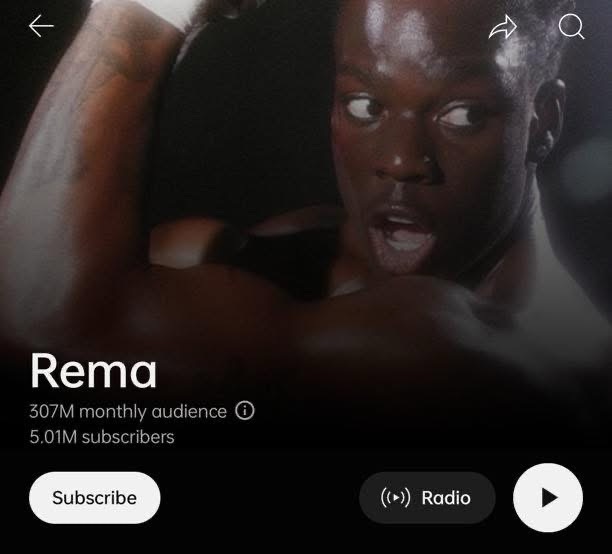
    Among the top African stars listed, Nigerian hitmaker Rema is leading with an astonishing 307 million unique monthly listeners. His massive success with global tracks like Calm Down and his steady presence on international charts continue to push his music to new heights.

    Here’s a full breakdown of the monthly audience numbers for selected African stars on YouTube Music:

    Rema — 307 million

    Chella — 109 million

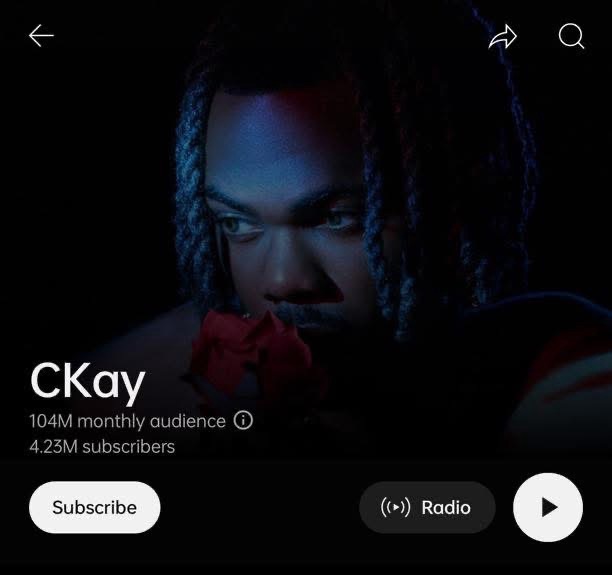
    CKay — 104 million

    Rema Leads the Pack as YouTube Music Unveils Monthly Audience Stats for African Artists

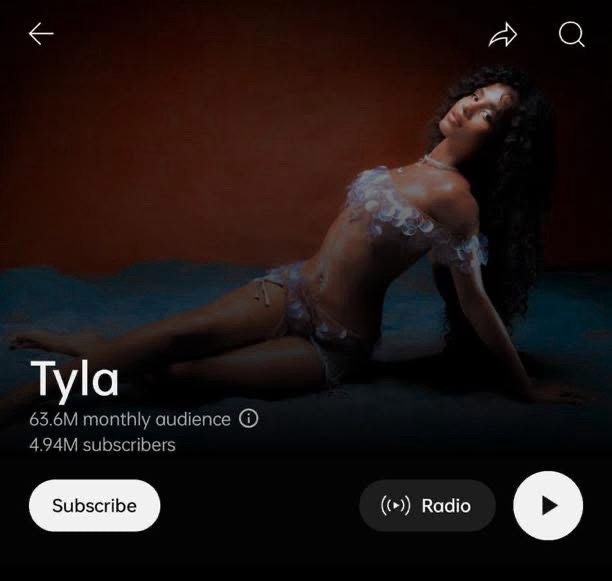
    Tyla — 63.6 million

    Davido — 57.8 million

    Burna Boy — 30.9 million

    Ayra Starr — 26.9 million

    Wizkid — 16.1 million

    Omah Lay — 11.5 million

    Asake — 9.01 million

    Rema Leads the Pack as YouTube Music Unveils Monthly Audience Stats for African Artists

    These numbers reflect how much listeners are tuning into each artist’s music. Rema’s position at the top isn’t just surprising — it shows how global his fanbase has become. Chella and CKay also rank high, showing they’re reaching large audiences beyond Africa.

    Wizkid and Burna Boy, two of Afrobeats’ most recognized names, posted relatively lower numbers, which caught many fans off guard. However, it’s worth noting that their audience might be spread across other platforms like Apple Music, Spotify, and Audiomack, which aren’t reflected in this YouTube Music metric.

    Asake’s 9 million is also notable, considering his rise in the last two years. With hits that have made waves across Nigeria and parts of the diaspora, he’s proving that consistency and a strong local following can still lead to global recognition.

  • Burna Boy Leads Nigerian Artists on the Billboard Hot 100: A New Milestone for Afrobeats

    Burna Boy Leads Nigerian Artists on the Billboard Hot 100: A New Milestone for Afrobeats

    Burna Boy continues to break barriers in the global music industry, making him one of the most successful Nigerian artists on the Billboard Hot 100 chart. With his distinct Afro-fusion sound, which blends elements of Afrobeat, dancehall, reggae, and pop, Burna Boy has captured the hearts of international audiences. This blog explores his latest achievement and its significance for Nigerian music on the global stage.

    Burna Boy Leads Nigerian Artists on the Billboard Hot 100: A New Milestone for Afrobeats
    Coldplay’s ‘We Pray’ featuring Burna Boy & Little Simz debuts at NO. 87 on the Billboard Hot 100

    Burna Boy’s Record-Breaking Billboard Hot 100 Entries

    As of 2024, Burna Boy has made six appearances on the prestigious Billboard Hot 100 chart, the most by any Nigerian artist. His most recent entry, ‘We Pray’ by Coldplay, in which he co-stars with Little Simz, marks the Grammy nominee’s most recent milestone. The song debuted at number 87 on the chart week of October 19, 2024.. This makes Burna the only African artist to chart on the Hot 100 for four consecutive years—a testament to his staying power and ability to adapt to the global music scene.

    Related: Burna Boy’s ‘Love, Damini’ Joins Nigerian Albums with Highest RIAA Certification: A New Milestone for Afrobeat

    His previous entries on the Billboard Hot 100 include:

    • “Last Last” (2022): A heartbreak anthem with an upbeat vibe that quickly became a fan favorite.
    • “Sittin’ On Top of the World” (2023): Featuring 21 Savage, this track blends hip-hop and Afrobeat, showcasing Burna Boy’s versatility.
    • “Talibans II” (2023): Collaborating with Byron Messia, this song brought Caribbean influence into the Afro-fusion genre.
    • “Loved By You” (2021): A feature on Justin Bieber’s Justice album, which introduced Burna Boy to a new audience.

    These accomplishments put Burna Boy ahead of many of his Nigerian contemporaries, including Wizkid, who has four entries, and Rema, Fireboy DML, and CKay, each with one. Alongside Tems, who also has five Hot 100 entries, Burna Boy has set a new benchmark for Nigerian artists aiming for international recognition.

    Burna Boy Leads Nigerian Artists on the Billboard Hot 100: A New Milestone for Afrobeats
    Burna boy Instagram photo

    The Rise of Afrobeats on the Global Stage

    Burna Boy’s success is a reflection of the growing popularity of Afrobeats worldwide. Once a niche genre, Afrobeats is now a global sensation, thanks to pioneers like Burna Boy, Wizkid, and Davido, who have consistently pushed the boundaries of African music. Burna Boy’s 2019 album African Giant was a major turning point, receiving critical acclaim and earning a Grammy nomination. Since then, his star has only risen, culminating in his Grammy win for Twice As Tall in 2021.

    His ability to collaborate with international stars like Beyoncé, Ed Sheeran, and Justin Bieber has helped bridge the gap between African music and global audiences. Songs like Jerusalema by Master KG and Essence by Wizkid featuring Tems have further solidified the genre’s presence on global charts.

    What Burna Boy’s Billboard Success Means for Nigerian Artists

    Burna Boy’s success on the Billboard Hot 100 is more than just a personal achievement; it’s a signal that Nigerian and African artists are making waves in the international music industry. It opens the door for more Nigerian musicians to be recognized on global platforms, increasing the demand for Afrobeats around the world.

    Related: What type of singer is Burna boy?

    As streaming platforms and social media break down geographical barriers, artists like Burna Boy are proving that music is universal. The continued chart success of Nigerian artists encourages the industry to take note, providing more opportunities for collaborations, international tours, and festival appearances.