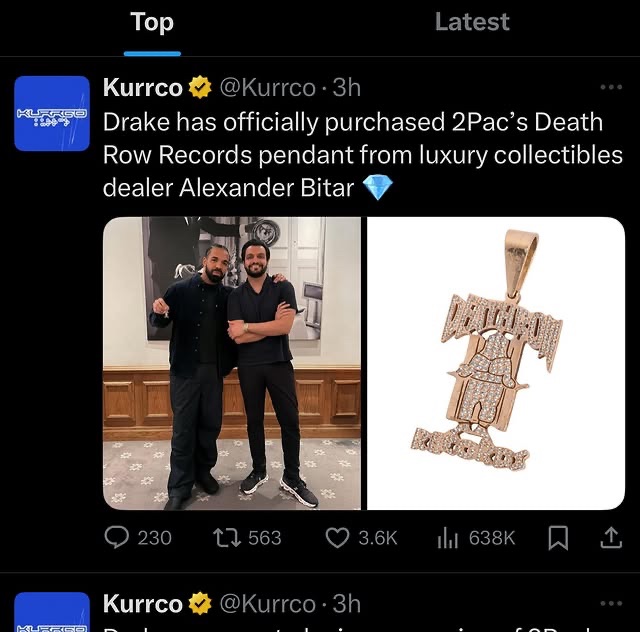
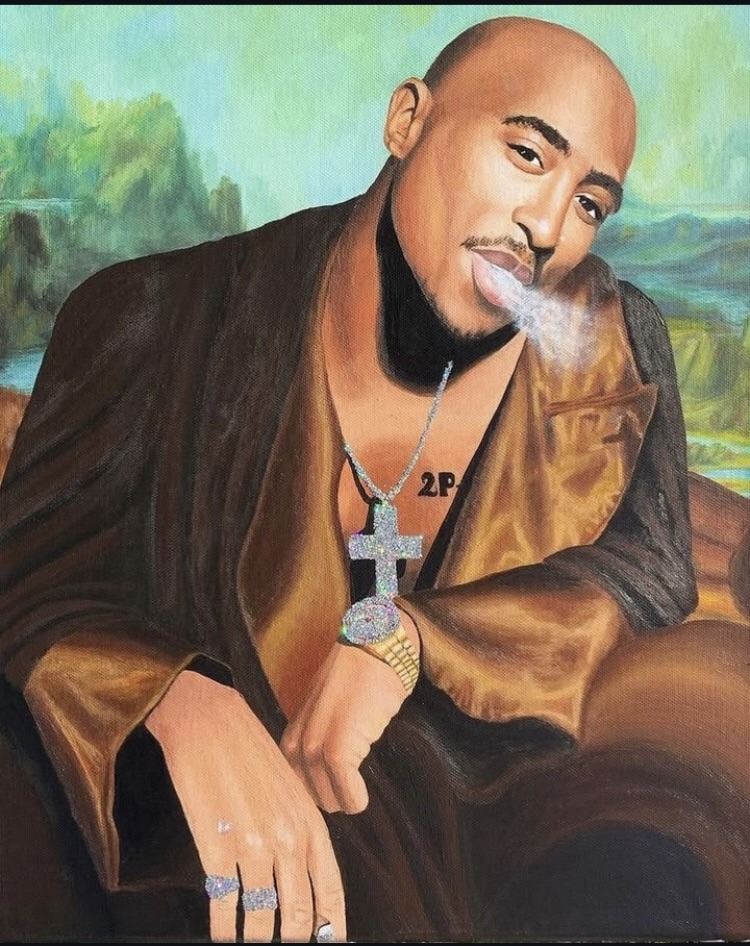
Drake has found himself in another controversy as Suge Knight, co-founder of Death Row Records, accused him of purchasing a fake piece of 2Pac’s legacy. The claim has sparked debates online, with fans calling it another embarrassing “L” for the Toronto superstar.
What did Suge Knight say about Drake’s 2Pac chain?
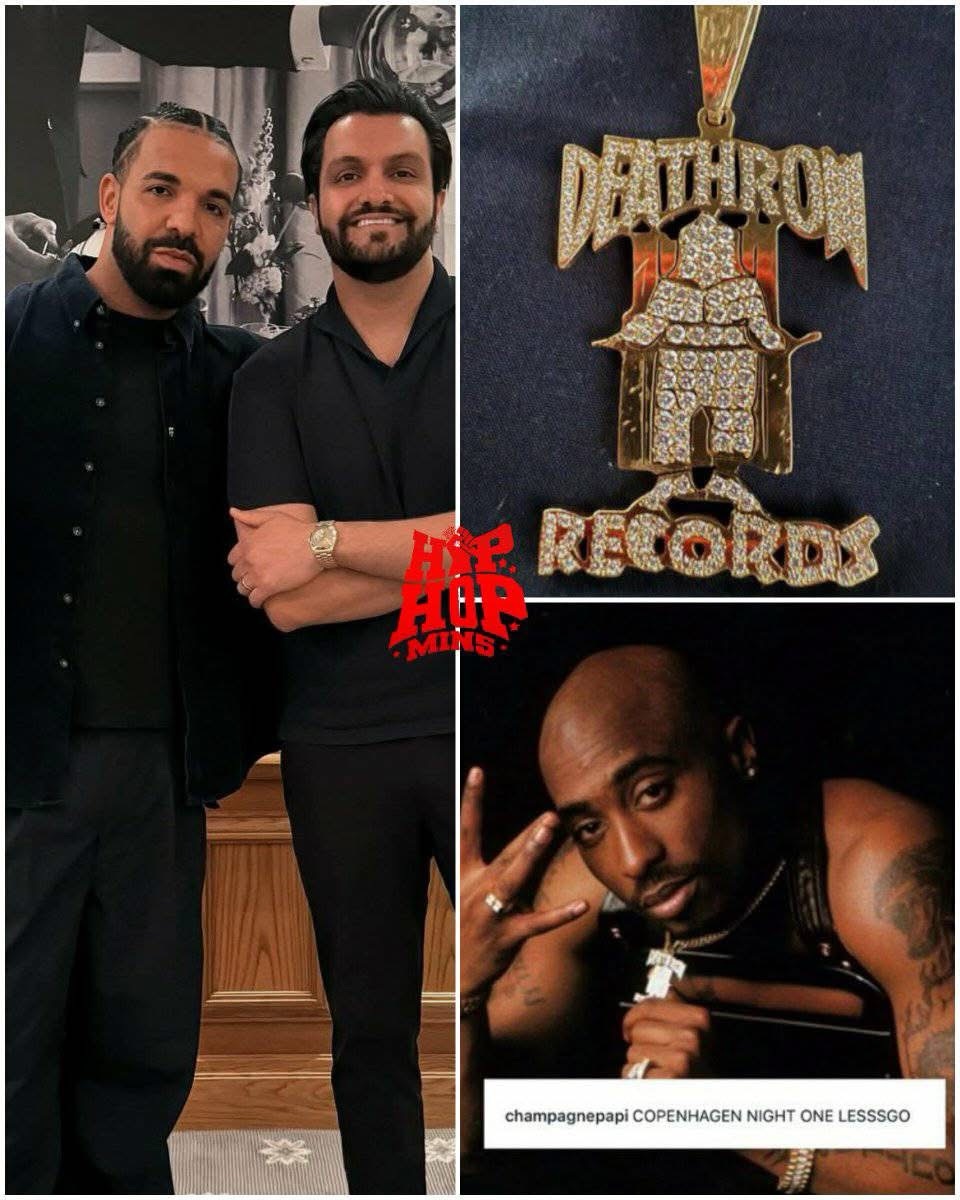
In a recent statement, Suge Knight dismissed Drake’s purchase, claiming it has no connection to Tupac Shakur or Death Row Records. He openly called out the rapper, saying whoever sold him the jewelry “played” him. According to Suge, Drake was tricked into believing he bought an authentic 2Pac or Death Row chain, but the piece was not legitimate.
Why is this story gaining attention?
Drake has been publicly collecting hip-hop memorabilia, including items tied to Tupac, to showcase his admiration for West Coast rap culture. The idea that he might have spent a huge sum on a fake piece has shocked fans and critics, especially after a detailed comparison reportedly showed major differences between the chain Drake owns and the original Death Row pieces from the 1990s.
What are fans saying about the situation?
Social media reactions have been mixed. Some fans are clowning Drake for getting “scammed,” while others believe this is just another case of hip-hop politics. A few fans even argued that this shows why Kendrick Lamar, a known 2Pac fan, has stayed away from chasing expensive memorabilia to prove his credibility.
Could Drake’s reputation take a hit?
This isn’t Drake’s first time in the headlines for controversies unrelated to music, and while his status as one of the world’s biggest artists remains solid, this incident adds another layer to the ongoing online narrative that he’s been taking losses both personally and professionally in recent months.
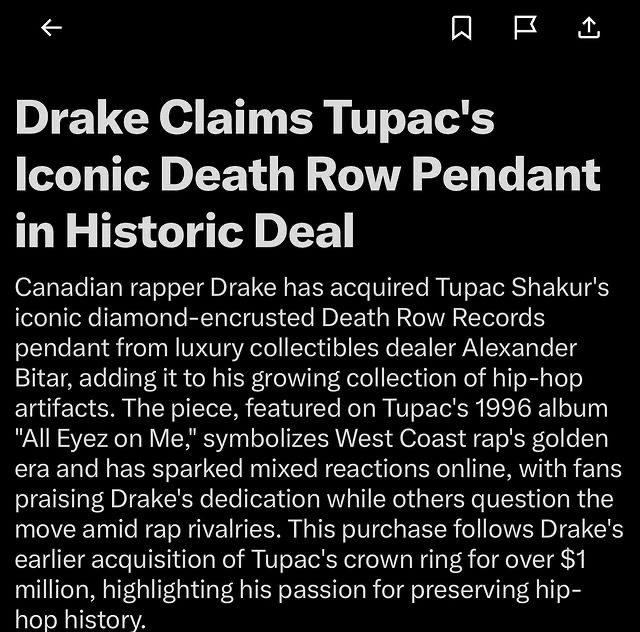
The conversation around Drake buying Tupac Shakur’s iconic Death Row Records pendant has sparked heated debates in the hip-hop world. Many fans and rappers feel that while Drake is one of the biggest names in music, he’s still not seen as part of West Coast street culture. This raises an important question: can someone really buy their way into hip-hop culture, or is it something you have to earn?
Why Drake’s Purchase Stirred Controversy
Drake purchasing Tupac’s pendant wasn’t just a luxury buy — it was a statement. Owning a piece of hip-hop history is a bold move, but it also comes with responsibility. Tupac isn’t just a rapper; he represents a struggle, a voice for the streets, and a generation that lived through real pain. Buying his chain doesn’t automatically make someone a part of that history.
West Coast rapper Glasses Malone expressed this frustration, saying Drake can’t “buy his way into the culture.” DJ Head echoed this by comparing Drake’s wealth to a rich kid who still wants to play with the kids on the ground, not out of respect but for a sense of belonging. This perspective speaks to how hip-hop sees authenticity: you can’t purchase respect, and you can’t buy credibility.
What Does “Culture” Mean in Hip-Hop?
Hip-hop culture is more than music. It’s a reflection of lived experiences, social struggles, and a way of life rooted in authenticity. From street corners to studios, the culture has always been about storytelling, self-expression, and community respect.
In this world, earning a name is about talent, loyalty, and surviving the hardships that shaped the music. Jewelry, fame, and success are symbols, but their meaning comes from the story behind them. That’s why someone can be a superstar and still not be fully embraced by the culture.
Can Wealth or Fame Earn Cultural Respect?
Money can open doors, but it doesn’t guarantee acceptance. The history of hip-hop is filled with artists who came from nothing and built their legacies on skill, character, and truth. Drake may be a global superstar, but he’s often seen as a guest in certain parts of hip-hop culture because he didn’t live the same struggles that defined artists like Tupac, Nipsey Hussle, or Ice Cube.
This doesn’t mean Drake doesn’t respect the culture — in fact, he often shows love for hip-hop legends. But respect in this community is earned through authenticity, not purchases.
Why This Conversation Matters
This discussion isn’t just about Drake. It’s about the meaning of culture in today’s music industry. Hip-hop has become a global phenomenon, and its symbols are now worth millions. But for those who grew up in it, culture isn’t for sale.
The backlash Drake is facing shows how protective the community is over its history. Tupac represents a voice that can’t be commercialized. Owning his pendant is a privilege, but it doesn’t automatically grant Drake entry into a circle built on shared struggle.
Drake is making headlines after acquiring some of Tupac Shakur’s most iconic possessions, adding new fuel to his ongoing feud with Kendrick Lamar. From Tupac’s custom Death Row Records pendant to the BMW he was riding in on the night of his death, Drake’s recent purchases have sparked conversations across the music world. Many are now asking what message Drake is trying to send and why Kendrick Lamar hasn’t made good on his lyrical vow to “double the wage” to reclaim these pieces of hip-hop history.
What Did Drake Buy From Tupac’s Collection?
Drake’s collection of Tupac memorabilia includes three of the rapper’s most famous possessions:
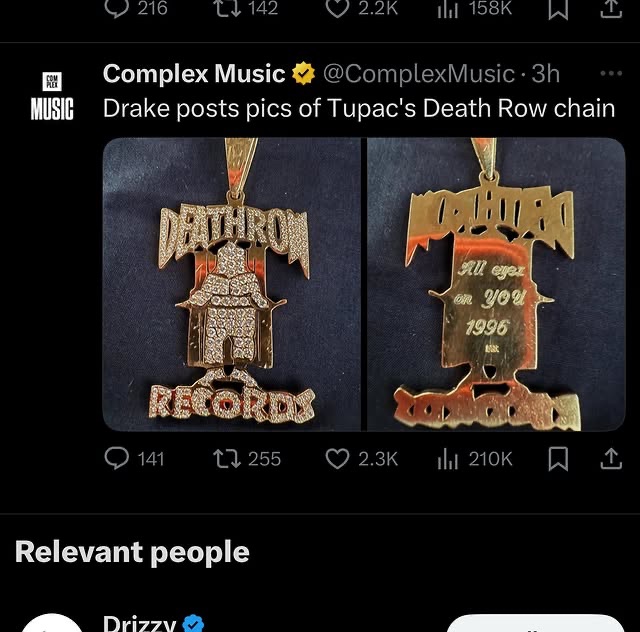
Tupac’s Death Row Records pendant: This is the diamond-studded chain Tupac wore during his time with Death Row Records. It’s one of the most recognizable pieces of jewelry in hip-hop history.
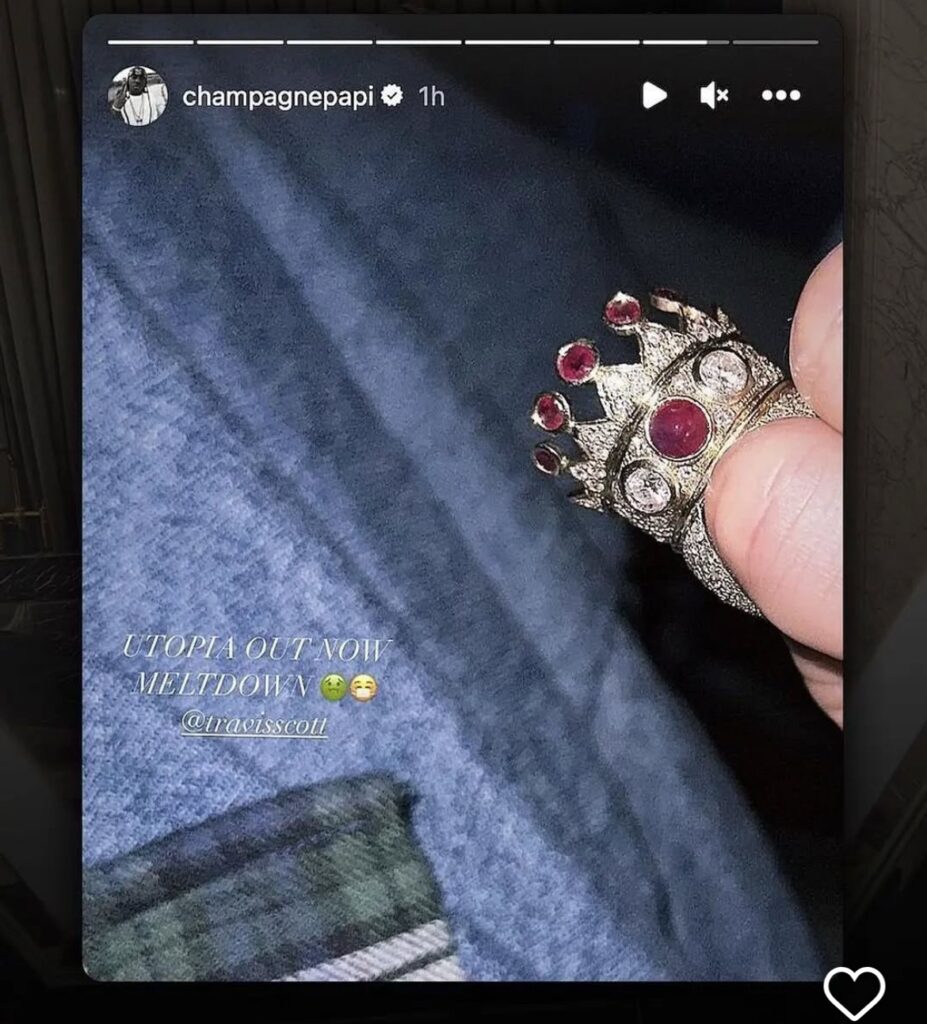
The gold and ruby crown ring: Designed by Tupac himself, this ring became iconic when he wore it to the 1996 MTV Video Music Awards. Drake bought it in a Sotheby’s auction for over $1 million.
The 1996 BMW 750iL sedan: This was the car Tupac was in when he was fatally shot in Las Vegas. It has been fully restored, and Drake reportedly paid $1.75 million for it.
These purchases aren’t just collector’s items—they are cultural symbols tied to Tupac’s life, legacy, and the era that shaped modern hip-hop.
Why Did Kendrick Lamar Mention Tupac’s Ring in “Euphoria”?
In April 2024, Kendrick Lamar released “Euphoria,” a diss track aimed at Drake. In the song, he called out Drake for buying Tupac’s ring, rapping:
“Somebody had told me that you got a ring, on God, I’m ready to double the wage.
I’d rather do that than let a Canadian n***a make Pac turn in his grave.”
This line suggested Kendrick was willing to pay more than Drake to secure Tupac’s jewelry and keep it away from someone he felt was unworthy of owning it. However, there’s no public evidence that Kendrick ever placed a bid or made a real attempt to buy the items. By the time the diss track dropped, Drake already owned the ring, and his recent acquisition of the pendant and car shows that he has doubled down on collecting Tupac memorabilia.
Is Drake Trying to Own Tupac’s Legacy?
Fans are divided on Drake’s motives. Here are some interpretations:
A show of power in the feud with Kendrick Lamar: In a rap battle, words are powerful, but actions like buying historically significant items can send a strong message. Drake’s purchases could be a way of asserting dominance and creating headlines that overshadow Kendrick’s lyrical attacks.
Cultural preservation: Some believe Drake is a genuine fan of Tupac and is buying these items to preserve hip-hop history. Collectors often see themselves as guardians of artifacts rather than rivals.
Street credibility and branding: Tupac is one of the most respected figures in hip-hop. Owning his most iconic possessions boosts Drake’s image and strengthens his place in rap culture.
Drake hasn’t released an official statement about why he’s collecting Tupac’s memorabilia, leaving room for speculation.
At the moment, Drake is the confirmed owner of all three items, and Kendrick has not publicly commented on the purchases.
In a striking turn of events, Tupac Shakur’s family has intensified their pursuit of answers, nearly three decades after the rapper’s tragic death. The family has hired attorney Alex Spiro to investigate Sean “Diddy” Combs‘ alleged involvement in the murder of Tupac.
This legal move comes in light of claims by Duane “Keefe D” Davis, who was arrested in 2023 for his connection to the murder. Davis has alleged that Diddy offered him $1 million to orchestrate the killing, raising serious questions about Diddy’s potential role.
Tupac Shakur’s Murder: Revisiting the Case
Tupac Shakur, one of the most influential rappers in hip-hop history, was fatally shot on September 7, 1996, in a drive-by attack in Las Vegas. The attack took place after a high-profile altercation involving Tupac and the Southside Crips gang, a known rival of Death Row Records, where Tupac was signed. The circumstances surrounding the shooting have been widely debated, but despite numerous theories, the case went cold for years.
In September 2023, Duane “Keefe D” Davis was arrested and charged with murder in connection with Tupac’s death. Davis, a former gang leader, had long been associated with the case and had made claims in interviews and a book that he was involved in the shooting. However, his most shocking allegation was that Diddy had offered him $1 million to carry out the hit on Tupac, adding a new dimension to the case.
Diddy’s Alleged Connection: What We Know So Far
The accusations against Diddy are not new. As early as 2008, Davis told investigators that Diddy had offered him money to eliminate both Tupac and Suge Knight, the co-founder of Death Row Records. While these claims were never substantiated, they have resurfaced due to Davis’ 2023 arrest and subsequent indictment. According to Davis, Diddy’s motivation was rooted in the violent East Coast-West Coast rivalry that dominated hip-hop at the time.
It is worth noting that Diddy has consistently denied these allegations, stating that the claims are “completely false.” However, the Shakur family’s decision to bring in a powerhouse legal team led by Alex Spiro suggests they are taking these accusations seriously and seeking definitive answers.
Who is Alex Spiro?
Alex Spiro
Alex Spiro is a renowned attorney with a high-profile client list, including Jay-Z, Elon Musk, and other influential figures. His involvement in this case signals the Shakur family’s commitment to uncovering the truth about Tupac’s murder. Spiro’s legal expertise and history of handling complex, high-stakes cases make him an ideal choice for investigating such serious claims.
In addition to Alex Spiro, the Shakur family has enlisted a team of investigators to thoroughly examine the allegations against Diddy. Their goal is to determine if there is enough evidence to support a wrongful death lawsuit against Diddy and to hold him accountable if he was indeed involved in Tupac’s murder.
Why Now?
The timing of this investigation is significant. With Davis’ trial set to begin in March 2025, the renewed attention on the case brings hope that the long-unsolved mystery surrounding Tupac’s death could finally be resolved. Davis has already implicated Diddy in the murder plot, and his trial is expected to reveal further details about the events leading up to the tragic shooting.
Furthermore, public interest in Tupac’s case remains strong, fueled by documentaries, books, and social media discussions. For the Shakur family, this renewed investigation represents a chance to bring closure to a painful chapter and ensure that justice is served for Tupac’s untimely death.
What Could Happen Next?
With Davis’ trial approaching and Spiro leading the investigation, it is possible that new evidence or testimony could emerge. If the claims against Diddy are substantiated, the music mogul could face legal consequences, although he has never been officially considered a suspect by law enforcement. The Shakur family’s investigation may lead to civil action in the form of a wrongful death lawsuit, which would seek damages for Diddy’s alleged role in the killing.
However, it is important to remember that these are allegations, and Diddy maintains his innocence. The upcoming trial will be crucial in determining whether Davis’ claims hold weight and if they will lead to further legal ramifications for others involved in the case.
In the mid-90s, hip-hop was defined by fierce rivalries, with the East Coast vs. West Coast feud standing out as the most notorious. This conflict reached a peak when 2Pac, after aligning with Death Row Records, released “Hit ‘Em Up,” a track that took direct aim at some of New York’s most respected artists, including Mobb Deep. Known for their raw, street-heavy sound, Mobb Deep took offense and responded with the track “Drop a Gem on ’Em.” This post explores the significance of their response, examining the background, the lyrics, and the impact this diss track had on 90s hip-hop.
The Build-Up: How 2Pac Targeted Mobb Deep
By 1996, the tension between East and West Coast rappers had escalated, largely fueled by 2Pac’s aggressive stance. Fresh out of prison and under the Death Row banner, 2Pac was relentless in his attacks, particularly on The Notorious B.I.G. and his circle.
In “Hit ‘Em Up,” he aimed his aggression at Mobb Deep, famously mocking Prodigy’s battle with sickle cell anemia with the line:
“Don’t one of you n**s got sickle cell or something?”
This line wasn’t taken lightly by Mobb Deep, prompting them to craft their own rebuttal.
Unpacking “Drop a Gem on ’Em”
Released on their Hell on Earth album in November 1996, “Drop a Gem on ’Em” served as Mobb Deep’s answer to 2Pac’s provocation. The track exemplifies the duo’s signature style, combining Havoc’s eerie production with Prodigy’s menacing delivery. Without mentioning 2Pac by name, the lyrics clearly address the insults thrown at them.
Prodigy’s line, “Rock you in your face, stab your brain with your nose bone,” stands out as one of the key moments in the track, conveying the intensity of their response. The approach taken by Mobb Deep was more subtle yet equally aggressive, leaning on street credibility and lyrical finesse.
Havoc’s beat reinforces the mood, characterized by dark, atmospheric sounds that mirror the gritty vibe of New York streets. Compared to 2Pac’s more straightforward attack in “Hit ‘Em Up,” Mobb Deep’s response relied on wordplay and a more layered approach to deliver their message.
The Controversy Around the Track’s Release
One aspect that adds to the significance of “Drop a Gem on ’Em” is its timing. The track was recorded before 2Pac’s death in September 1996, but its release came after, raising ethical questions about whether a diss track should be dropped when the target is no longer alive. Mobb Deep did consider shelving the track but ultimately chose to release it, noting that the recording was already completed and relevant to the ongoing rivalry.
Despite the controversy, the track gained significant attention and quickly became a fan favorite. It remains a standout moment on Hell on Earth, reinforcing Mobb Deep’s position in the upper echelon of 90s rap.
The Lasting Impact of “Drop a Gem on ’Em”
Within the broader narrative of 90s hip-hop, “Drop a Gem on ’Em” goes beyond being a diss track. It captures the intensity of rap feuds at a time when words carried real consequences. Unlike many modern-day diss tracks that chase social media attention, Mobb Deep’s response was deeply personal, rooted in their desire to defend their reputation and neighborhood pride.
The track remains a pivotal moment in Mobb Deep’s catalog, demonstrating their ability to stand firm without compromising their sound. While it never reached the commercial success of 2Pac’s “Hit ‘Em Up,” it is still revered as a classic by hardcore hip-hop enthusiasts. Its legacy is a reminder of how serious these rivalries were during that era, and how they shaped the careers of those involved.
The Significance of “Drop a Gem on ’Em” for Mobb Deep’s Legacy
Following the release of Hell on Earth, Mobb Deep’s status as one of the most respected duos in rap solidified further. The album debuted at number six on the Billboard 200 and highlighted the group’s consistent ability to produce gritty, authentic music even during a time of heightened tension in the rap scene.
For hip-hop fans, “Drop a Gem on ’Em” stands as a symbol of the era when rap beefs had weight and meaning. It’s a track that encapsulates the no-nonsense, street-centric ethos that defined Mobb Deep’s sound and solidified their reputation. Through all the drama of the East Coast vs. West Coast conflict, Mobb Deep held their ground and delivered a song that’s still celebrated decades later.
In the world of hip-hop, diss tracks have always been a central part of the culture. From battles over beats to lyrical takedowns, they represent the raw essence of competition in rap music. Over the years, we’ve seen many iconic diss tracks, from Nas’s Ether to Pusha T’s The Story of Adidon. Yet, despite the countless rap battles and lyrical feuds that have emerged, Tupac Shakur’s Hit ‘Em Up still stands tall as the most iconic and ruthless diss track in hip-hop history.
While newer diss tracks like Kendrick Lamar’s Not Like Us may have shattered records and drawn attention, Hit ‘Em Up has a legacy and impact that numbers alone can’t quantify. In this article, we explore why Hit ‘Em Up remains unparalleled and why it’s still regarded as the greatest diss track ever recorded.
The Context: East Coast vs. West Coast Feud
Before talking about the track itself, it’s important to understand the historical significance of Hit ‘Em Up. The mid-90s saw the height of the East Coast vs. West Coast rivalry, a cultural divide that defined hip-hop. On one side, you had Bad Boy Records, led by The Notorious B.I.G. (Biggie Smalls) and Puff Daddy, representing New York’s East Coast sound. On the other side, there was Death Row Records, spearheaded by Tupac and Suge Knight, representing the West Coast.
Hit ‘Em Up wasn’t just another diss track—it was Tupac’s response to what he perceived as betrayal by Biggie and the East Coast, accusing them of being involved in his 1994 shooting. The beef became personal, and Hit ‘Em Up was Tupac’s explosive retaliation.
Raw Emotion and Aggression
One of the reasons Hit ‘Em Up remains iconic is the raw, unfiltered aggression in Tupac’s delivery. The track opens with the now-legendary line: “First off, fk your b*h and the clique you claim.” This introduction alone sets the tone for the entire track, where Tupac goes on a tirade against Biggie, Puffy, Lil’ Kim, and everyone associated with Bad Boy Records.
Unlike many other diss tracks that use clever wordplay or subtle jabs, Hit ‘Em Up is as direct and confrontational as it gets. Tupac wasn’t just dissing Biggie; he was looking to humiliate him on a personal level. The venom in Tupac’s voice, combined with the ruthless nature of the insults, makes the track feel intensely personal. This level of raw emotion is hard to replicate, which is why Hit ‘Em Upcontinues to be the number one diss track of all times.
Lyrical Brutality and No Holds Barred Approach
Another key factor that sets Hit ‘Em Up apart is its unapologetic brutality. Tupac didn’t just throw a few insults; he went all in, attacking everything from Biggie’s credibility to his crew’s loyalty. The track was filled with personal shots, explicit threats, and disrespectful taunts, making it clear that this wasn’t just about rap—it was a declaration of war.
While some might argue that other diss tracks like Nas’s Etheror Jay-Z’s Takeover are lyrically superior, Hit ‘Em Up is unmatched in its sheer audacity. Tupac’s willingness to take things to such an extreme level is what makes the track unforgettable. He made it clear that this wasn’t just about skill—it was about dominance.
The Cultural and Historical Significance
When discussing the greatest diss tracks of all time, it’s impossible to overlook the cultural impact of Hit ‘Em Up. The track didn’t just shake the rap world; it defined an era. At a time when tensions between the East Coast and West Coast were already at a boiling point, Hit ‘Em Up added fuel to the fire, escalating the feud to unprecedented levels.
Hit ‘Em Up isn’t just a song—it’s a cultural artifact. It’s a snapshot of a time when rap wasn’t just entertainment; it was life and death. The tragic outcomes of both Tupac and Biggie only further cemented the legendary status of the track. Hit ‘Em Up symbolizes the danger, intensity, and realness that defined 90s hip-hop.
Influence on Future Diss Tracks
While there have been many diss tracks before and after Hit ‘Em Up, its influence is undeniable. It set the bar for what a diss track should be—bold, aggressive, and utterly disrespectful. Artists like Eminem, Drake, Pusha T, and others have all drawn from the blueprint that Tupac laid down with Hit ‘Em Up.
Even when newer diss tracks break streaming records or go viral, they rarely carry the same weight. Hit ‘Em Up was more than just a diss track; it was a statement. It represented the intensity of real-life conflict and had consequences far beyond the music industry. While Kendrick Lamar’s Not Like Us might be breaking records, it doesn’t have the historical and cultural significance that Hit ‘Em Up carries.
Why Hit ‘Em Up Will Always Be the GOAT of Diss Tracks
Tupac Shakur’s Hit ‘Em Up remains the greatest diss track in rap history because it transcends music. It’s not just about numbers or streams; it’s about impact, emotion, and legacy. From its opening line to its unapologetic brutality, Hit ‘Em Up set a standard that has yet to be matched.
In the end, diss tracks are not just about lyrical skill—they’re about moments. Hit ‘Em Up was a moment in hip-hop history that will never be forgotten. Even as new diss tracks emerge and break records, they can’t erase the legacy of Tupac’s magnum opus. The track’s blend of personal venom, cultural significance, and historical context is why Hit ‘Em Up continues to be the undisputed king of rap beef.
The world of hip-hop has been rocked by new allegations surrounding the death of Tupac Shakur, one of its most iconic figures. According to recent court documents, Sean “Diddy” Combs is accused of offering $1 million to have Tupac killed. These revelations come from Duane “Keffe D” Davis, who has been a central figure in the investigation of Tupac’s murder. In this blog post, we will delve into the details of these claims, the background of the East Coast/West Coast feud, and the responses from those involved.
Diddy
The Allegations
Keffe D, a former Compton Crip, alleges that Diddy offered him $1 million to kill Tupac Shakur and Suge Knight, the head of Death Row Records. This claim was made in a taped confession that has been submitted as evidence in court. According to Keffe D, the offer was made during the height of the East Coast/West Coast rap wars, a period marked by intense rivalry and violence between the two factions.
In the tape, Keffe D recounts how Diddy purportedly expressed his desire to eliminate both Tupac and Suge Knight. The tape, which has been reviewed by multiple media outlets, contains chilling details of the alleged conspiracy. Keffe D’s claims have added a new layer of intrigue to the long-unsolved murder of Tupac Shakur, who was killed in a drive-by shooting in Las Vegas in 1996
In the papers filed on Thursday (July 18), Diddy is named 77 times by his various pseudonyms: Puffy, Puff Daddy, Puff and his government name, Sean Combs.
“Defendant [Keefe] has asserted publicly that he only told on himself and wasn’t trying to provide evidence against anyone else in his conversations with police. However, this statement belies this claim, as he suggested that Sean Combs paid Eric Von Martin a million dollars for the killings,” the documents read in part.
In one of the transcripts, Davis reportedly testified to Diddy’s involvement in 2Pac’s murder.
Police asked Davis, “Puffy Combs….Does he play a role in this thing?…” and Davis replied, “Yeah, I think he did.” Davis said Diddy told him and a group of about 45 people how he “would give anything” for Knight’s “head” because he was “scared” of him and also had a problem with Shakur after he had released a diss track about him.
Prosecutors filed the documents in a bid to oppose Davis’ latest bail request. His $112,500 bail bond was rejected last month over concerns about the source of the money.
However, it’s still unknown if Diddy will be subpoenaed or indicted as part of the case.
Background of the Feud
The East Coast/West Coast rivalry was a major conflict in the 1990s hip-hop scene. On one side was Death Row Records, led by Suge Knight and featuring artists like Tupac Shakur. On the other side was Bad Boy Records, led by Diddy and featuring artists like The Notorious B.I.G. The feud was fueled by personal animosities, diss tracks, and violent confrontations.
Tupac’s murder on September 7, 1996, came at the peak of this rivalry. Despite numerous theories and investigations, the case remained unsolved for decades. The latest allegations against Diddy have reignited interest in the case and raised questions about the true motives behind Tupac’s killing.
Diddy’s Response
Sean “Diddy” Combs has consistently denied any involvement in Tupac’s murder. In response to the latest allegations, Diddy has reiterated that the story is “pure fiction” and “completely ridiculous.” He has maintained his innocence in numerous interviews and has even reached out to Tupac’s family to assert that he had no role in the murder
The Legal Proceedings
The court documents and tape recordings provided by Keffe D have become key pieces of evidence in the ongoing investigation. Las Vegas prosecutors are using these materials to build their case against Keffe D, who has been charged with murder in connection with Tupac’s death. The revelations in the tape recordings could potentially reshape the narrative surrounding Tupac’s murder and bring new insights into the involvement of key figures in the hip-hop industry
The allegations that Diddy offered $1 million to have Tupac killed are shocking and have reignited interest in one of the most infamous unsolved murders in hip-hop history. As the legal proceedings unfold, more details are likely to emerge, shedding light on the complex web of relationships and rivalries that defined the East Coast/West Coast feud.