Tag: Ai Music

  • Why AI Music Detection Is Failing as Streaming Platforms Rush to Label AI Songs

    Why AI Music Detection Is Failing as Streaming Platforms Rush to Label AI Songs

    Streaming platforms are rushing to label AI-generated music as detection systems struggle to identify synthetic songs after mixing and mastering

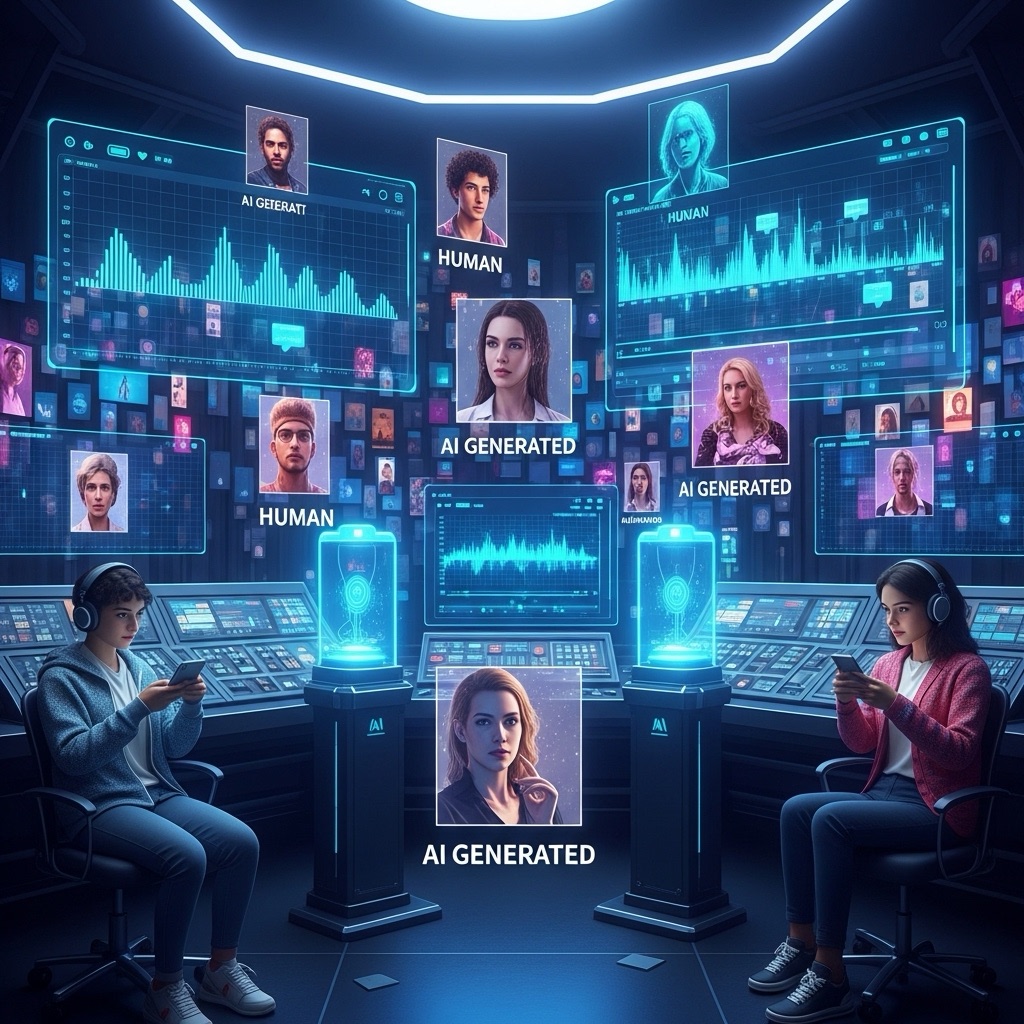
    New studies show 97% of listeners can’t reliably tell AI music from human music, while platforms like Spotify, Apple Music, and Deezer now push for AI transparency and disclosure tags.

    Artificial intelligence is already flooding streaming platforms with music, and most listeners cannot tell the difference anymore.

    New listener studies show that 97% of people struggle to reliably identify whether a song was made by a human or generated by AI. At the same time, 80% of listeners say they want clear labels on streaming services showing when artificial intelligence was used in a track.

    That gap between listener trust and platform transparency is becoming one of the biggest debates in the music industry.

    Streaming services including Apple Music, Spotify, Deezer, Bandcamp, and Qobuz are now introducing AI music disclosure systems, detection tools, and new rules around transparency.

    The industry is no longer asking whether AI music should exist. The focus has shifted toward tracking it, labeling it, and controlling how it spreads across streaming platforms.

    Related: Why Gen Z Is Turning Against AI Music Despite Listening to It More Than Anyone Else

    Why Are Streaming Platforms Suddenly Labeling AI Music?

    The pressure started building after the viral release of Heart on My Sleeve in 2023.

    The song used AI-generated vocals that sounded almost identical to Drake and The Weeknd. Before rights holders could react, the track had already gained millions of streams online.

    That moment exposed a major weakness inside the music business.

    Labels realized they could no longer manually track every AI-generated upload hitting streaming services. Platforms also understood that listeners could easily mistake synthetic music for official releases.

    Since then, music companies have started building AI detection systems directly into their upload pipelines and metadata systems.

    Industry discussions are now centered around AI disclosure, artist consent, copyright tracking, metadata verification, synthetic voice protection, and training data transparency.

    Music executives are treating provenance data as the next major layer of digital music rights management.
    ai music detection failing
    ai music detection failing

    Can People Actually Tell AI Music From Human Music?

    Most people cannot.

    Research cited across multiple listener studies shows that nearly all listeners struggle to reliably separate fully AI-generated songs from human-created music.

    That confusion is starting to affect trust.

    Many listeners now say they feel uncomfortable listening to music when they do not know whether artificial intelligence created the vocals, lyrics, or instrumental production.

    • 72% of listeners want streaming platforms to disclose when AI-generated music is being recommended
    • 45% say they would actively avoid AI-generated songs
    • 40% say they would skip AI music if they discovered it during playback

    The reaction is not entirely anti-AI.

    A large number of listeners support AI-assisted production tools used for mixing, mastering, or editing. The backlash becomes stronger when artificial intelligence replaces the artist completely or imitates real musicians without consent.

    How Does AI Music Detection Actually Work?

    AI music detection tools analyze patterns inside audio files to determine whether machine-generated systems likely created the track.

    • vocal synthesis patterns
    • instrumental generation signatures
    • waveform inconsistencies
    • spectral fingerprints
    • metadata traces
    • training-model artifacts

    One of the best-known systems currently comes from Cyanite.

    According to the company, its detector successfully identifies most AI-generated tracks created with platforms like Suno, Udio, and ElevenLabs.

    Cyanite claims detection accuracy reaches around 98% on raw WAV audio files.

    The company also says false positives are extremely rare, meaning fully human songs are unlikely to be incorrectly tagged as AI-generated.

    Why Is AI Music Detection Still Failing?

    The problem appears after songs enter real-world production pipelines.

    • mixing
    • mastering
    • compression
    • equalization
    • post-production processing

    Once tracks go through those stages, detection accuracy starts dropping.

    This is one reason many critics argue current AI detection systems are still unreliable outside controlled testing environments.

    Some Reddit users and AI music creators claim entirely human performances have already been incorrectly flagged as AI-generated by various tools.

    Others argue that processed AI music becomes much harder to distinguish once engineers alter the original audio file.

    “It works very accurately on pure AI audio, but the accuracy drops when there’s any secondary mixing, mastering, or compression.”

    That creates a serious issue for streaming services trying to automate moderation systems at scale.

    What Is Apple Music’s AI Transparency Policy?

    Apple Music introduced a new “Transparency Tags” system designed to identify when artificial intelligence played a major role in music production.

    • Artwork
    • Tracks
    • Compositions
    • Music Videos

    The platform says the labels are intended for situations where AI generated a meaningful portion of the work rather than minor technical assistance.

    “Proper tagging of content is the first step in giving the music industry the data and tools needed to develop thoughtful policies around AI.”

    Apple Music also stated that labels and distributors will eventually be expected to disclose AI-generated content during uploads.

    What Is Spotify Doing About AI Music?

    Spotify is focusing heavily on impersonation, deepfake abuse, streaming manipulation, and spam prevention.

    The platform is also working with DDEX, the Digital Data Exchange standard used across the music business, to create broader AI disclosure systems.

    • AI-generated vocals
    • AI instrumentation
    • AI-assisted mixing
    • synthetic production involvement

    Spotify’s strategy appears less focused on banning AI music and more focused on disclosure and platform safety.

    Why Did Bandcamp Ban AI-Generated Music?

    Bandcamp took one of the strongest positions in the industry.

    The platform reportedly banned music that is fully or substantially generated by artificial intelligence.

    That decision reflects growing demand for human-created music as a premium category.

    • human-made music
    • non-AI vocals
    • authentic songwriting
    • organic recordings

    Why Is Deezer Detecting AI Songs Automatically?

    Deezer says around 60,000 fully AI-generated songs are uploaded to its platform every single day.

    To manage the volume, the company developed its own AI music detection system.

    Deezer now automatically identifies and labels AI-generated tracks. The platform also excludes many AI songs from algorithmic and editorial recommendations.

    Can Fans Block AI Music Completely?

    Some platforms are already testing that option.

    Coda Music introduced settings that allow users to turn AI music recommendations on or off completely.

    • AI tracks become ineligible for autoplay
    • AI music disappears from radio recommendations
    • generative playlists stop including synthetic artists

    The platform also labels identified synthetic performers with “AI ARTIST” tags.

    Related: AI and the Music Industry: How Artificial Intelligence Is Changing Music Creation, Streaming, and Artist Income

    What Are Artists and Labels Demanding?

    why ai music detection failing
    why ai music detection failing

    The largest concerns inside the music industry are consent, compensation, training data transparency, and artist control.

    Universal Music Group has already entered discussions with AI companies, though the label says artist consent remains central to its strategy.

    Creator groups are demanding stricter rules around how AI systems train on copyrighted music catalogs.

    More than 10,500 creatives reportedly signed statements calling for explicit permission before AI training, fair payment for usage, and stronger disclosure systems.

    Sony Music Group also publicly opted out of AI training systems using its licensed recordings in 2024.

    Many musicians now fear two separate problems:

    • their voices being cloned without permission
    • their real music being falsely labeled as AI-generated

    What Is the EU AI Act Saying About Music?

    The European Union’s AI Act treats many forms of AI-generated media as high-risk systems requiring transparency obligations.

    Creator groups have pushed lawmakers to strengthen rules around training data disclosure, AI-generated content labeling, visible warnings for synthetic media, and artist consent systems.

    California’s Generative AI Disclosure Act already requires disclosure surrounding copyrighted materials used during AI training processes.

    The legal side of AI music is still developing, but streaming platforms, labels, and governments increasingly want traceable AI metadata attached to music uploads.

    Why Metadata Is Becoming the Music Industry’s New Weapon

    Music companies are beginning to realize they cannot remove every AI-generated upload after release.

    The newer strategy focuses on tracking songs before they spread across streaming systems.

    Platforms want to know:

    • who created the track
    • whether AI generated vocals
    • whether synthetic instruments were used
    • which datasets trained the system
    • whether artists gave permission

    Rights holders believe better provenance tracking could reduce lawsuits, improve royalty auditing, and create more accountability around synthetic music.

    What Happens Next for AI Music?

    The music industry appears headed toward three different platform models.

    Transparency-First Platforms

    Services like Apple Music and Qobuz are leaning toward disclosure systems that allow AI music but require clear labeling.

    Detection-Driven Platforms

    Deezer is focusing heavily on automated AI detection and recommendation filtering.

    Human-Only Platforms

    Platforms like Bandcamp and initiatives like iHeartRadio’s “Guaranteed Human” campaign are positioning human-created music as a protected category.

    The Bigger Problem Facing the Music Industry

    The industry is facing a trust issue more than a technology issue.

    Listeners already struggle to identify synthetic music.

    Detection systems still fail after real-world audio processing.

    Platforms are racing to introduce disclosure systems before AI-generated uploads become impossible to track at scale.

    The next phase of music streaming may depend less on whether AI music exists and more on whether audiences believe they are being told the truth about what they are hearing.

    Reported by Anything Celebrity – Nigeria’s hub for entertainment gist and celebrity updates.

    See more on Anything Celebrity entertainment news.

    © 2026 Anything Celebrity. Follow us on social: X | Facebook.

  • Why Gen Z Is Turning Against AI Music Despite Listening to It More Than Anyone Else

    Why Gen Z Is Turning Against AI Music Despite Listening to It More Than Anyone Else

    Gen Z listens to more AI music than anyone else, but many are now rejecting fully AI-generated songs over concerns about fake artist cloning, lack of emotion, and originality

    New reports show most listeners want AI music labeled clearly, with many saying they prefer AI assisting artists — not replacing human creativity completely.

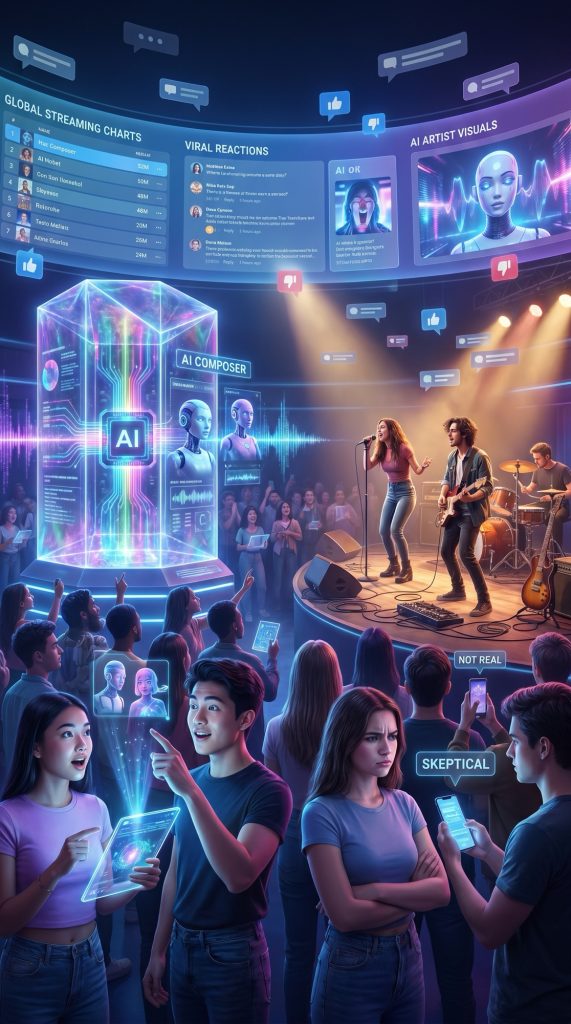
    AI music is growing fast, but public opinion is shifting in the opposite direction. New reports and listener surveys show that many people — especially Gen Z and Gen Alpha — are becoming more uncomfortable with fully AI-generated songs, AI artist clones, and tracks that imitate real musicians.

    The most surprising part is that younger listeners are also the people consuming AI music the most. Many use AI tools themselves for beats, songwriting ideas, vocal editing, and content creation. Still, when it comes to fully AI-made songs or fake artist recreations, reactions quickly turn negative.

    Recent studies show people are worried about originality, transparency, artist identity, and emotional connection. Many listeners say AI music sounds technically good but emotionally empty. Others say they feel misled when they cannot tell whether a song was made by a real artist or generated by software.

    The debate around AI music is no longer just about technology. It is now about trust, authenticity, ownership, and what people want music to feel like in the future.

    why gen z against ai music
    why gen z against ai music

    New Reports Show Interest in AI Music Is Falling

    A recent Luminate report tracking listener attitudes between May and November 2025 found that consumer interest in AI music dropped from -13% to -20% within six months.

    The report also stated that consumers generally have a negative perception of AI music and that more people feel uneasy than comfortable about its growing role in the industry.

    The strongest shift came from Gen Z and Gen Alpha listeners. These are the same audiences driving streaming culture on TikTok, YouTube Shorts, Instagram Reels, and Spotify.

    Young listeners are hearing more AI music than any generation before them, yet many are also becoming more skeptical of it.

    People React More Negatively to Fully AI-Generated Songs

    The reports make an important distinction between AI-assisted music and fully AI-generated music.

    AI-assisted music includes cases where artists use AI tools for production help, lyric ideas, mixing, mastering, or vocal editing.

    Fully AI-generated songs are different. These tracks can be created without a real human performer attached to the music at all.

    Listener reactions become much harsher once the human element disappears completely.

    Many respondents said they are more comfortable with AI helping artists than replacing them entirely.

    One of the biggest emotional reactions came from listeners who felt AI-generated songs lacked personal experience, struggle, memory, or storytelling.

    Comments from listeners often sounded like this:

    “It sounds clean, but it doesn’t feel lived in.”

    “I can hear the difference emotionally even if the production sounds good.”

    “AI can imitate music, but it cannot imitate human experience.”

    Why AI Songs That Copy Real Artists Trigger the Strongest Backlash

    The strongest negative reactions came from AI songs that mimic real artists.

    Listeners said they are especially uncomfortable with songs designed to sound like famous musicians without permission.

    This includes:

    • AI voice cloning
    • Fake unreleased songs
    • AI-generated vocals
    • Songs copying an artist’s signature style
    • Deepfake music uploads on streaming platforms

    Many fans see this as crossing a line.

    For younger audiences, artist identity matters deeply. Fans connect with musicians through interviews, social media, life stories, performances, and personal struggles. When AI copies that identity artificially, many listeners feel manipulated.

    Some reactions online include:

    “If the artist didn’t approve it, it’s fake.”

    “That’s not the real person. It’s a copy pretending to be human.”

    “I don’t want AI using someone’s voice after they worked years to build their sound.”

    For many people, the issue is no longer whether AI music sounds good. The issue is consent.

    Most People Cannot Tell if a Song Is AI-Generated

    The study found that 97% of listeners could not reliably tell whether a song was fully AI-generated or made by a human artist.

    A Deezer and Ipsos survey added another major concern.

    That statistic shocked many people online.

    The inability to identify AI music has increased pressure on streaming platforms to label AI-generated content clearly.

    The same research found:

    • 80% want AI music labeled clearly
    • 72% want streaming services to disclose AI recommendations
    • 45% would actively avoid AI-generated songs
    • 40% said they would skip AI tracks if discovered

    One major concern repeated across social media discussions is the fear of being tricked.

    Many listeners are not fully against AI tools. They simply want transparency.

    A common reaction online sounds like this:

    “Tell me it’s AI first. Don’t make me discover it later.”

    Gen Z Uses AI Music More Than Any Other Generation

    A Morgan Stanley survey from 2026 found that 60% of people aged 18 to 29 listen to AI music regularly, averaging around three hours weekly.

    This creates an interesting contradiction.

    Young listeners consume AI music heavily, yet negative sentiment toward AI-generated artists continues to rise among the same group.

    Many younger users experiment with AI creatively themselves.

    Some use AI for:

    • Beat creation
    • Demo vocals
    • Song ideas
    • Remixes
    • TikTok audio edits
    • Independent music production

    Still, many draw a clear line between AI as a tool and AI replacing artists completely.

    That distinction appears repeatedly across listener comments.

    “Using AI to help create music is fine. Pretending AI is the artist is where it gets weird.”

    Many Listeners Say AI Music Feels Emotionally Empty

    A biometric study published in PLOS One during 2025 found that AI-generated music could trigger strong reactions physically, including excitement and stimulation.

    At the same time, participants described AI songs as less intimate and emotionally distant compared to human-created music.

    This emotional gap appears repeatedly in listener feedback.

    People often describe AI songs as:

    • Overproduced
    • Too perfect
    • Emotionally flat
    • Uncanny
    • Soulless
    • Missing human struggle

    Many listeners believe real music carries memories, pain, culture, mistakes, and lived experiences that AI cannot genuinely replicate.

    Originality Is Becoming a Bigger Concern

    gen z against ai music
    gen z against ai music

    A YouGov survey found that the biggest concern people have about AI music is originality.

    59% of respondents said they fear AI music could reduce uniqueness in music.

    Other major concerns included:

    • Musicians losing work opportunities
    • Copyright disputes
    • Over-commercialization
    • Streaming oversaturation
    • Reduced genre diversity

    Many people worry the industry could become flooded with algorithm-friendly songs designed for streams instead of emotional connection.

    Some listeners also fear labels may eventually prioritize cheaper AI-generated acts over developing real artists.

    Why Gen Z and Gen Alpha Care So Much About Authenticity

    Gen Z and Gen Alpha grew up online.

    They are already used to:

    • Deepfakes
    • Algorithm-driven feeds
    • AI recommendations
    • Edited online identities
    • Viral fake content

    That exposure has made younger audiences highly sensitive to authenticity.

    Music is one of the few places where many listeners still want real emotion, real identity, and real storytelling.

    Fans want to know:

    • Who wrote the song?
    • Who sang it?
    • Who experienced the emotions behind it?
    • Was the artist actually involved?

    That emotional connection matters heavily in modern fan culture.

    Could Human-Made Music Become More Valuable?

    Many industry watchers believe the rise of AI music may increase the value of verified human artistry.

    • Cheap AI-generated functional music for background listening and algorithms
    • Human-driven music built around identity, emotion, and artist connection

    As AI-generated tracks flood streaming platforms, live performances, personal storytelling, handwritten lyrics, and authentic artist identities may become more important commercially.

    Some experts believe music could split into two categories:

    This shift may already be starting.

    Listeners are asking more questions about how songs are made and whether artists approved the use of AI.

    What This Means for the Future of AI Music

    AI music is not disappearing anytime soon.

    The technology is improving rapidly, and many artists will continue using AI tools during production.

    Still, listener reactions show something important.

    People may accept AI as assistance, but many are resisting the idea of AI replacing human creativity entirely.

    The strongest backlash appears when AI removes transparency, imitates real artists without consent, or hides the human element behind the music.

    For streaming platforms, labels, and artists, trust may become one of the most important parts of music marketing in the AI era.

    Listeners are already making their expectations clear:

    • Label AI-generated songs clearly
    • Respect artist consent
    • Protect originality
    • Keep human creativity visible

    The future of music may not be about choosing between humans and AI.

    It may come down to whether audiences still believe there is a real person behind the song.

    Related: AI and the Music Industry: How Artificial Intelligence Is Changing Music Creation, Streaming, and Artist Income

    Reported by Anything Celebrity – Nigeria’s hub for entertainment gist and celebrity updates.

    See more on Anything Celebrity entertainment news.

    © 2026 Anything Celebrity. Follow us on social: X | Facebook.
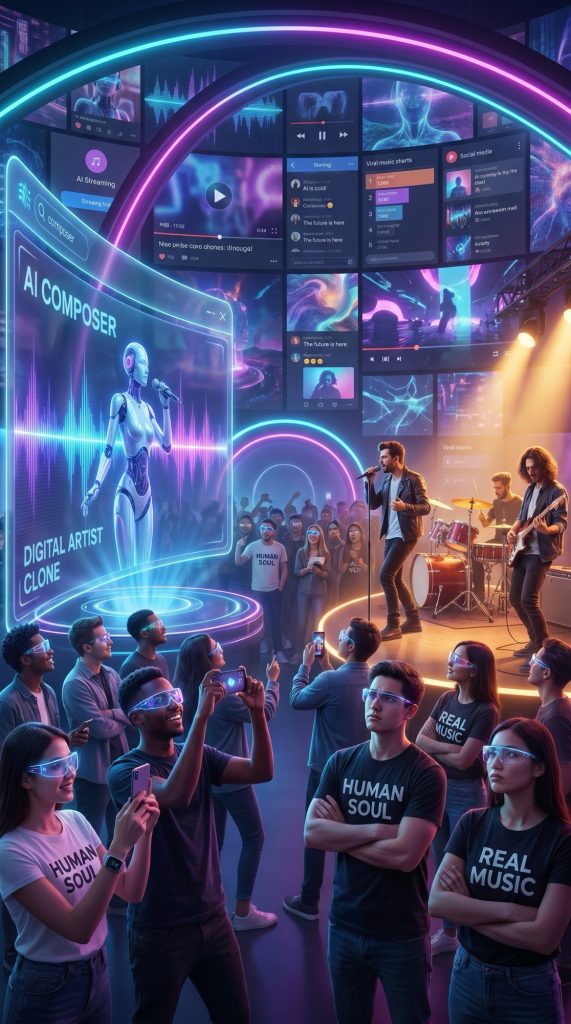
  • AI and the Music Industry: How Artificial Intelligence Is Changing Music Creation, Streaming, and Artist Income

    AI and the Music Industry: How Artificial Intelligence Is Changing Music Creation, Streaming, and Artist Income

    AI is already reshaping the music industry by powering streaming recommendations, assisting music production, and influencing how hits are discovered. Platforms like Spotify and Apple use AI to analyze listener behaviour, while producers now use AI tools for beats, melodies, and sound design. However, concerns around voice cloning, copyright, and reduced artist income are growing, making AI a powerful but controversial force that is changing how music is created, distributed, and monetized.

    Artificial Intelligence is already reshaping the music industry. From how songs are produced to how they are recommended on streaming platforms, AI is now part of the entire music system. It is helping artists work faster, changing how hits are discovered, and raising serious questions about copyright, voice cloning, and artist earnings.

    Platforms like Spotify already rely heavily on AI-powered recommendation systems, while record labels and tech companies such as Apple are using machine learning to understand listener behaviour and predict trends.

    The result is a music industry where human creativity and machine systems are now working side by side.

    african artist working with ai
    african artist working with ai

    What is AI doing in the music industry right now?

    AI is now involved in almost every stage of the music process. It is used in production, distribution, discovery, and marketing.

    Streaming platforms like Spotify use AI systems to recommend songs, build playlists, and decide what appears on users’ homepages. This directly influences which songs become popular.

    On the production side, AI tools can generate beats, suggest melodies, assist with mixing, and even create full instrumental drafts from text prompts.

    Some tools also generate synthetic vocals that sound similar to real human singers, which is now one of the most controversial areas in the industry.

    How AI is changing music creation

    Music creation has become faster and more experimental due to AI tools. Many producers now start songs with AI-generated ideas before refining them manually.

    Common uses include:

    • Beat and drum pattern generation
    • Chord progression suggestions
    • Vocal tuning and editing assistance
    • Sound design experimentation

    Some artists treat AI as a creative assistant, using it to overcome writer’s block or speed up early-stage production. Others avoid it completely and stick to traditional methods.

    Why are people worried about AI in music?

    Even though AI is helping creativity, it is also creating concern across the industry.

    AI voice cloning and imitation

    One major concern is the ability of AI tools to imitate real artists’ voices without permission. This raises serious questions about identity and consent.

    Impact on artist income

    There is growing fear that AI-generated music could reduce demand for human producers, writers, and session musicians, especially for commercial projects like ads and background music.

    Oversaturation of music content

    Streaming platforms may be flooded with large volumes of AI-generated songs, making it harder for human artists to stand out.


    What do fans think about AI music?

    Public opinion is divided.

    Some listeners enjoy AI-assisted music when it is clearly labeled and used for casual listening or background content. Others reject it completely, especially when it mimics known artists.

    Many listeners still prefer music that feels personal, emotional, and tied to real human experiences.


    How record labels and streaming platforms are reacting

    Music companies are actively experimenting with AI while trying to manage legal and ethical concerns.

    Companies like Apple are using AI to improve music recommendations, organise large music catalogs, and analyse listening trends.

    Record labels are also using AI to predict viral sounds, track social media trends, and improve playlist placement strategies.

    However, most companies are moving carefully due to copyright and voice rights issues.


    Can AI replace musicians?

    AI can generate sound, but it does not replace human identity in music.

    Music built on personal experiences, live performance energy, and cultural expression still depends on human artists.

    AI works best as a supporting tool, not a replacement for creativity.


    african artist working with ai
    african artist working with ai

    Legal issues around AI music

    Lawmakers and music organisations are currently dealing with new challenges caused by AI.

    Key issues include:

    • Ownership of AI-generated songs
    • Use of artist voices without consent
    • Copyright and training data concerns
    • Royalty distribution for AI-assisted music

    There is increasing pressure for clearer laws around voice protection and music data usage.


    How AI is changing music business models

    AI is also reshaping how music earns money.

    Streaming platforms now rely heavily on AI algorithms that decide which songs get exposure. This directly affects streaming revenue distribution.

    New models being explored include AI-generated music libraries for ads and games, automated licensing systems, and adaptive music that changes based on user activity.


    The future of AI in music

    The music industry is moving toward a hybrid system where both human creativity and AI tools exist side by side.

    Human artists are likely to remain central in performance and cultural storytelling, while AI will continue expanding in production, marketing, and background music creation.

    The direction of the industry will depend on regulation, platform policies, and how audiences respond to AI-generated content.

    Related: Why Gen Z Is Turning Against AI Music Despite Listening to It More Than Anyone Else

    Reported by Anything Celebrity – Nigeria’s hub for entertainment gist and celebrity updates.

    See more on Anything Celebrity entertainment news.

    © 2026 Anything Celebrity. Follow us on social: X | Facebook.