
Gen Z listens to more AI music than anyone else, but many are now rejecting fully AI-generated songs over concerns about fake artist cloning, lack of emotion, and originality
New reports show most listeners want AI music labeled clearly, with many saying they prefer AI assisting artists — not replacing human creativity completely.
AI music is growing fast, but public opinion is shifting in the opposite direction. New reports and listener surveys show that many people — especially Gen Z and Gen Alpha — are becoming more uncomfortable with fully AI-generated songs, AI artist clones, and tracks that imitate real musicians.
The most surprising part is that younger listeners are also the people consuming AI music the most. Many use AI tools themselves for beats, songwriting ideas, vocal editing, and content creation. Still, when it comes to fully AI-made songs or fake artist recreations, reactions quickly turn negative.
Recent studies show people are worried about originality, transparency, artist identity, and emotional connection. Many listeners say AI music sounds technically good but emotionally empty. Others say they feel misled when they cannot tell whether a song was made by a real artist or generated by software.
The debate around AI music is no longer just about technology. It is now about trust, authenticity, ownership, and what people want music to feel like in the future.
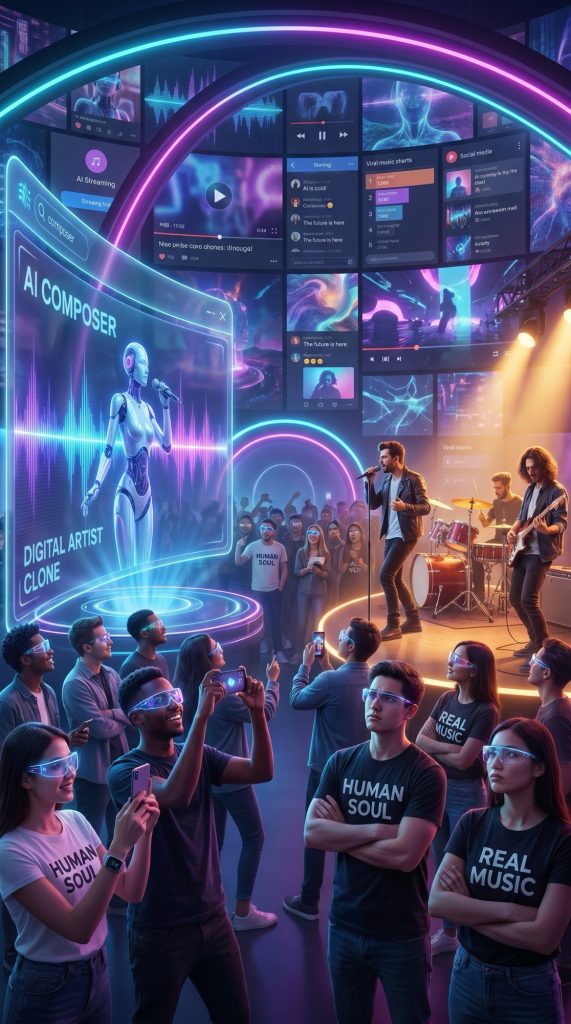
New Reports Show Interest in AI Music Is Falling
A recent Luminate report tracking listener attitudes between May and November 2025 found that consumer interest in AI music dropped from -13% to -20% within six months.
The report also stated that consumers generally have a negative perception of AI music and that more people feel uneasy than comfortable about its growing role in the industry.
The strongest shift came from Gen Z and Gen Alpha listeners. These are the same audiences driving streaming culture on TikTok, YouTube Shorts, Instagram Reels, and Spotify.
Young listeners are hearing more AI music than any generation before them, yet many are also becoming more skeptical of it.
People React More Negatively to Fully AI-Generated Songs
The reports make an important distinction between AI-assisted music and fully AI-generated music.
AI-assisted music includes cases where artists use AI tools for production help, lyric ideas, mixing, mastering, or vocal editing.
Fully AI-generated songs are different. These tracks can be created without a real human performer attached to the music at all.
Listener reactions become much harsher once the human element disappears completely.
Many respondents said they are more comfortable with AI helping artists than replacing them entirely.
One of the biggest emotional reactions came from listeners who felt AI-generated songs lacked personal experience, struggle, memory, or storytelling.
Comments from listeners often sounded like this:
“It sounds clean, but it doesn’t feel lived in.”
“I can hear the difference emotionally even if the production sounds good.”
“AI can imitate music, but it cannot imitate human experience.”
Why AI Songs That Copy Real Artists Trigger the Strongest Backlash
The strongest negative reactions came from AI songs that mimic real artists.
Listeners said they are especially uncomfortable with songs designed to sound like famous musicians without permission.
This includes:
- AI voice cloning
- Fake unreleased songs
- AI-generated vocals
- Songs copying an artist’s signature style
- Deepfake music uploads on streaming platforms
Many fans see this as crossing a line.
For younger audiences, artist identity matters deeply. Fans connect with musicians through interviews, social media, life stories, performances, and personal struggles. When AI copies that identity artificially, many listeners feel manipulated.
Some reactions online include:
“If the artist didn’t approve it, it’s fake.”
“That’s not the real person. It’s a copy pretending to be human.”
“I don’t want AI using someone’s voice after they worked years to build their sound.”
For many people, the issue is no longer whether AI music sounds good. The issue is consent.
Most People Cannot Tell if a Song Is AI-Generated
The study found that 97% of listeners could not reliably tell whether a song was fully AI-generated or made by a human artist.
A Deezer and Ipsos survey added another major concern.
That statistic shocked many people online.
The inability to identify AI music has increased pressure on streaming platforms to label AI-generated content clearly.
The same research found:
- 80% want AI music labeled clearly
- 72% want streaming services to disclose AI recommendations
- 45% would actively avoid AI-generated songs
- 40% said they would skip AI tracks if discovered
One major concern repeated across social media discussions is the fear of being tricked.
Many listeners are not fully against AI tools. They simply want transparency.
A common reaction online sounds like this:
“Tell me it’s AI first. Don’t make me discover it later.”
Gen Z Uses AI Music More Than Any Other Generation
A Morgan Stanley survey from 2026 found that 60% of people aged 18 to 29 listen to AI music regularly, averaging around three hours weekly.
This creates an interesting contradiction.
Young listeners consume AI music heavily, yet negative sentiment toward AI-generated artists continues to rise among the same group.
Many younger users experiment with AI creatively themselves.
Some use AI for:
- Beat creation
- Demo vocals
- Song ideas
- Remixes
- TikTok audio edits
- Independent music production
Still, many draw a clear line between AI as a tool and AI replacing artists completely.
That distinction appears repeatedly across listener comments.
“Using AI to help create music is fine. Pretending AI is the artist is where it gets weird.”
Many Listeners Say AI Music Feels Emotionally Empty
A biometric study published in PLOS One during 2025 found that AI-generated music could trigger strong reactions physically, including excitement and stimulation.
At the same time, participants described AI songs as less intimate and emotionally distant compared to human-created music.
This emotional gap appears repeatedly in listener feedback.
People often describe AI songs as:
- Overproduced
- Too perfect
- Emotionally flat
- Uncanny
- Soulless
- Missing human struggle
Many listeners believe real music carries memories, pain, culture, mistakes, and lived experiences that AI cannot genuinely replicate.
Originality Is Becoming a Bigger Concern
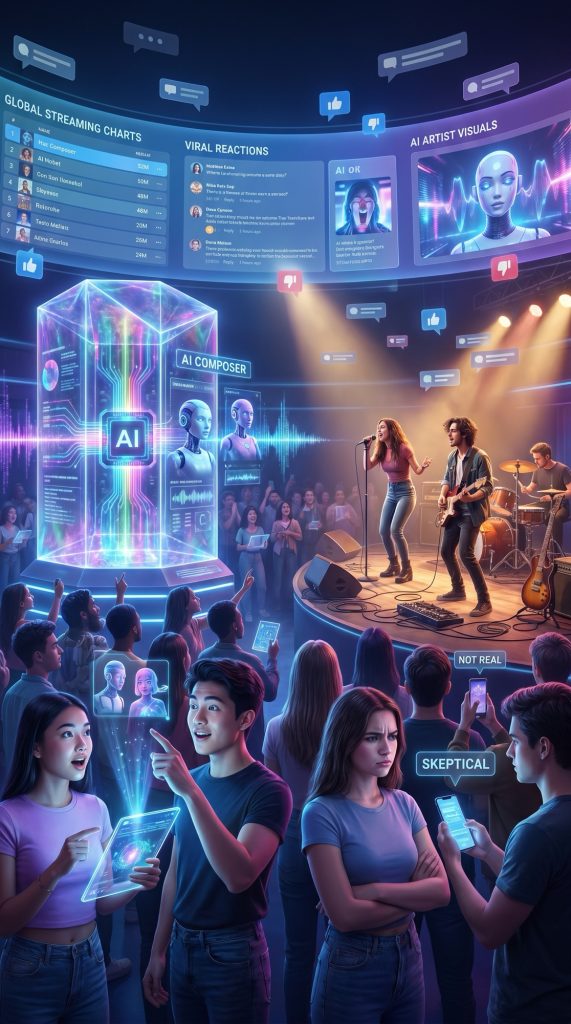
A YouGov survey found that the biggest concern people have about AI music is originality.
59% of respondents said they fear AI music could reduce uniqueness in music.
Other major concerns included:
- Musicians losing work opportunities
- Copyright disputes
- Over-commercialization
- Streaming oversaturation
- Reduced genre diversity
Many people worry the industry could become flooded with algorithm-friendly songs designed for streams instead of emotional connection.
Some listeners also fear labels may eventually prioritize cheaper AI-generated acts over developing real artists.
Why Gen Z and Gen Alpha Care So Much About Authenticity
Gen Z and Gen Alpha grew up online.
They are already used to:
- Deepfakes
- Algorithm-driven feeds
- AI recommendations
- Edited online identities
- Viral fake content
That exposure has made younger audiences highly sensitive to authenticity.
Music is one of the few places where many listeners still want real emotion, real identity, and real storytelling.
Fans want to know:
- Who wrote the song?
- Who sang it?
- Who experienced the emotions behind it?
- Was the artist actually involved?
That emotional connection matters heavily in modern fan culture.
Could Human-Made Music Become More Valuable?
Many industry watchers believe the rise of AI music may increase the value of verified human artistry.
- Cheap AI-generated functional music for background listening and algorithms
- Human-driven music built around identity, emotion, and artist connection
As AI-generated tracks flood streaming platforms, live performances, personal storytelling, handwritten lyrics, and authentic artist identities may become more important commercially.
Some experts believe music could split into two categories:
This shift may already be starting.
Listeners are asking more questions about how songs are made and whether artists approved the use of AI.
What This Means for the Future of AI Music
AI music is not disappearing anytime soon.
The technology is improving rapidly, and many artists will continue using AI tools during production.
Still, listener reactions show something important.
People may accept AI as assistance, but many are resisting the idea of AI replacing human creativity entirely.
The strongest backlash appears when AI removes transparency, imitates real artists without consent, or hides the human element behind the music.
For streaming platforms, labels, and artists, trust may become one of the most important parts of music marketing in the AI era.
Listeners are already making their expectations clear:
- Label AI-generated songs clearly
- Respect artist consent
- Protect originality
- Keep human creativity visible
The future of music may not be about choosing between humans and AI.
It may come down to whether audiences still believe there is a real person behind the song.
Related: AI and the Music Industry: How Artificial Intelligence Is Changing Music Creation, Streaming, and Artist Income
Reported by Anything Celebrity – Nigeria’s hub for entertainment gist and celebrity updates.
See more on Anything Celebrity entertainment news.
© 2026 Anything Celebrity. Follow us on social: X | Facebook.
Leave a Reply