Streaming platforms are rushing to label AI-generated music as detection systems struggle to identify synthetic songs after mixing and mastering
New studies show 97% of listeners can’t reliably tell AI music from human music, while platforms like Spotify, Apple Music, and Deezer now push for AI transparency and disclosure tags.
Artificial intelligence is already flooding streaming platforms with music, and most listeners cannot tell the difference anymore.
New listener studies show that 97% of people struggle to reliably identify whether a song was made by a human or generated by AI. At the same time, 80% of listeners say they want clear labels on streaming services showing when artificial intelligence was used in a track.
That gap between listener trust and platform transparency is becoming one of the biggest debates in the music industry.
Streaming services including Apple Music, Spotify, Deezer, Bandcamp, and Qobuz are now introducing AI music disclosure systems, detection tools, and new rules around transparency.
The industry is no longer asking whether AI music should exist. The focus has shifted toward tracking it, labeling it, and controlling how it spreads across streaming platforms.
Related: Why Gen Z Is Turning Against AI Music Despite Listening to It More Than Anyone Else
Why Are Streaming Platforms Suddenly Labeling AI Music?
The pressure started building after the viral release of Heart on My Sleeve in 2023.
The song used AI-generated vocals that sounded almost identical to Drake and The Weeknd. Before rights holders could react, the track had already gained millions of streams online.
That moment exposed a major weakness inside the music business.
Labels realized they could no longer manually track every AI-generated upload hitting streaming services. Platforms also understood that listeners could easily mistake synthetic music for official releases.
Since then, music companies have started building AI detection systems directly into their upload pipelines and metadata systems.
Industry discussions are now centered around AI disclosure, artist consent, copyright tracking, metadata verification, synthetic voice protection, and training data transparency.
Music executives are treating provenance data as the next major layer of digital music rights management.
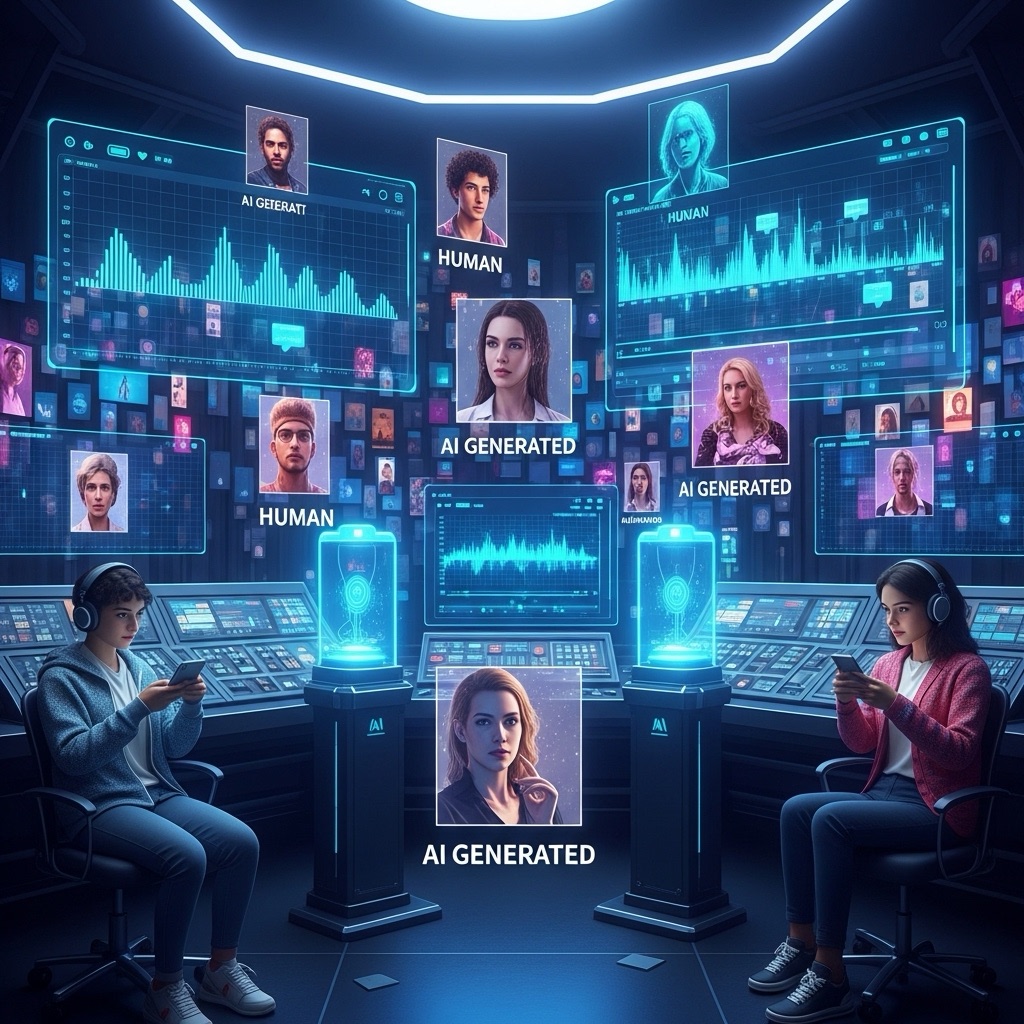
Can People Actually Tell AI Music From Human Music?
Most people cannot.
Research cited across multiple listener studies shows that nearly all listeners struggle to reliably separate fully AI-generated songs from human-created music.
That confusion is starting to affect trust.
Many listeners now say they feel uncomfortable listening to music when they do not know whether artificial intelligence created the vocals, lyrics, or instrumental production.
- 72% of listeners want streaming platforms to disclose when AI-generated music is being recommended
- 45% say they would actively avoid AI-generated songs
- 40% say they would skip AI music if they discovered it during playback
The reaction is not entirely anti-AI.
A large number of listeners support AI-assisted production tools used for mixing, mastering, or editing. The backlash becomes stronger when artificial intelligence replaces the artist completely or imitates real musicians without consent.
How Does AI Music Detection Actually Work?
AI music detection tools analyze patterns inside audio files to determine whether machine-generated systems likely created the track.
- vocal synthesis patterns
- instrumental generation signatures
- waveform inconsistencies
- spectral fingerprints
- metadata traces
- training-model artifacts
One of the best-known systems currently comes from Cyanite.
According to the company, its detector successfully identifies most AI-generated tracks created with platforms like Suno, Udio, and ElevenLabs.
Cyanite claims detection accuracy reaches around 98% on raw WAV audio files.
The company also says false positives are extremely rare, meaning fully human songs are unlikely to be incorrectly tagged as AI-generated.
Why Is AI Music Detection Still Failing?
The problem appears after songs enter real-world production pipelines.
- mixing
- mastering
- compression
- equalization
- post-production processing
Once tracks go through those stages, detection accuracy starts dropping.
This is one reason many critics argue current AI detection systems are still unreliable outside controlled testing environments.
Some Reddit users and AI music creators claim entirely human performances have already been incorrectly flagged as AI-generated by various tools.
Others argue that processed AI music becomes much harder to distinguish once engineers alter the original audio file.
“It works very accurately on pure AI audio, but the accuracy drops when there’s any secondary mixing, mastering, or compression.”
That creates a serious issue for streaming services trying to automate moderation systems at scale.
What Is Apple Music’s AI Transparency Policy?
Apple Music introduced a new “Transparency Tags” system designed to identify when artificial intelligence played a major role in music production.
- Artwork
- Tracks
- Compositions
- Music Videos
The platform says the labels are intended for situations where AI generated a meaningful portion of the work rather than minor technical assistance.
“Proper tagging of content is the first step in giving the music industry the data and tools needed to develop thoughtful policies around AI.”
Apple Music also stated that labels and distributors will eventually be expected to disclose AI-generated content during uploads.
What Is Spotify Doing About AI Music?
Spotify is focusing heavily on impersonation, deepfake abuse, streaming manipulation, and spam prevention.
The platform is also working with DDEX, the Digital Data Exchange standard used across the music business, to create broader AI disclosure systems.
- AI-generated vocals
- AI instrumentation
- AI-assisted mixing
- synthetic production involvement
Spotify’s strategy appears less focused on banning AI music and more focused on disclosure and platform safety.
Why Did Bandcamp Ban AI-Generated Music?
Bandcamp took one of the strongest positions in the industry.
The platform reportedly banned music that is fully or substantially generated by artificial intelligence.
That decision reflects growing demand for human-created music as a premium category.
- human-made music
- non-AI vocals
- authentic songwriting
- organic recordings
Why Is Deezer Detecting AI Songs Automatically?
Deezer says around 60,000 fully AI-generated songs are uploaded to its platform every single day.
To manage the volume, the company developed its own AI music detection system.
Deezer now automatically identifies and labels AI-generated tracks. The platform also excludes many AI songs from algorithmic and editorial recommendations.
Can Fans Block AI Music Completely?
Some platforms are already testing that option.
Coda Music introduced settings that allow users to turn AI music recommendations on or off completely.
- AI tracks become ineligible for autoplay
- AI music disappears from radio recommendations
- generative playlists stop including synthetic artists
The platform also labels identified synthetic performers with “AI ARTIST” tags.
Related: AI and the Music Industry: How Artificial Intelligence Is Changing Music Creation, Streaming, and Artist Income
What Are Artists and Labels Demanding?

The largest concerns inside the music industry are consent, compensation, training data transparency, and artist control.
Universal Music Group has already entered discussions with AI companies, though the label says artist consent remains central to its strategy.
Creator groups are demanding stricter rules around how AI systems train on copyrighted music catalogs.
More than 10,500 creatives reportedly signed statements calling for explicit permission before AI training, fair payment for usage, and stronger disclosure systems.
Sony Music Group also publicly opted out of AI training systems using its licensed recordings in 2024.
Many musicians now fear two separate problems:
- their voices being cloned without permission
- their real music being falsely labeled as AI-generated
What Is the EU AI Act Saying About Music?
The European Union’s AI Act treats many forms of AI-generated media as high-risk systems requiring transparency obligations.
Creator groups have pushed lawmakers to strengthen rules around training data disclosure, AI-generated content labeling, visible warnings for synthetic media, and artist consent systems.
California’s Generative AI Disclosure Act already requires disclosure surrounding copyrighted materials used during AI training processes.
The legal side of AI music is still developing, but streaming platforms, labels, and governments increasingly want traceable AI metadata attached to music uploads.
Why Metadata Is Becoming the Music Industry’s New Weapon
Music companies are beginning to realize they cannot remove every AI-generated upload after release.
The newer strategy focuses on tracking songs before they spread across streaming systems.
Platforms want to know:
- who created the track
- whether AI generated vocals
- whether synthetic instruments were used
- which datasets trained the system
- whether artists gave permission
Rights holders believe better provenance tracking could reduce lawsuits, improve royalty auditing, and create more accountability around synthetic music.
What Happens Next for AI Music?
The music industry appears headed toward three different platform models.
Transparency-First Platforms
Services like Apple Music and Qobuz are leaning toward disclosure systems that allow AI music but require clear labeling.
Detection-Driven Platforms
Deezer is focusing heavily on automated AI detection and recommendation filtering.
Human-Only Platforms
Platforms like Bandcamp and initiatives like iHeartRadio’s “Guaranteed Human” campaign are positioning human-created music as a protected category.
The Bigger Problem Facing the Music Industry
The industry is facing a trust issue more than a technology issue.
Listeners already struggle to identify synthetic music.
Detection systems still fail after real-world audio processing.
Platforms are racing to introduce disclosure systems before AI-generated uploads become impossible to track at scale.
The next phase of music streaming may depend less on whether AI music exists and more on whether audiences believe they are being told the truth about what they are hearing.
Reported by Anything Celebrity – Nigeria’s hub for entertainment gist and celebrity updates.
See more on Anything Celebrity entertainment news.
© 2026 Anything Celebrity. Follow us on social: X | Facebook.
Leave a Reply